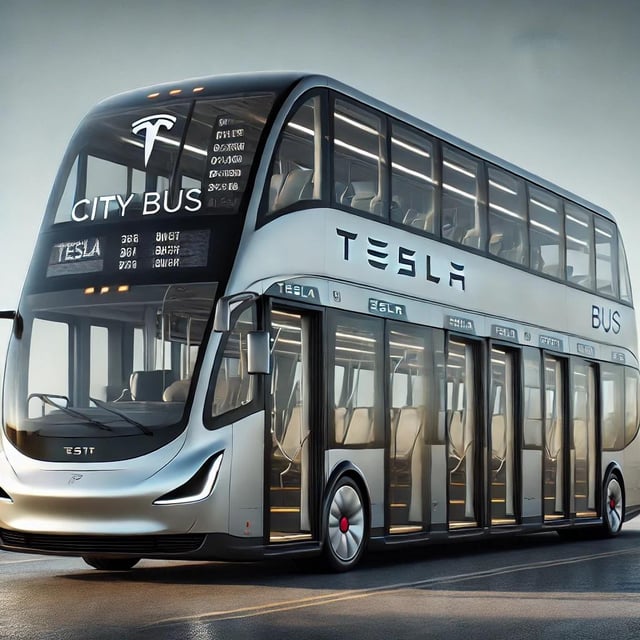
Elon Musk, the visionary behind Tesla, SpaceX, and other groundbreaking ventures, has once again stunned the world with a bold new idea that could revolutionize transportation as we know it. Recently, Musk unveiled his vision for a futuristic Tesla Self-Driving Bus—an innovative leap forward in public transit technology. Designed to reduce traffic, improve efficiency, and move people in a safer, more sustainable manner, the Tesla Self-Driving Bus promises to change the way we think about mass transportation forever.
The Vision: A Fully Autonomous Transit System
Musk’s new self-driving bus concept is rooted in Tesla’s dedication to autonomy, sustainability, and advanced artificial intelligence. The vision is clear: create an intelligent, fully autonomous vehicle that can efficiently transport large groups of people in cities, suburban areas, and even across highways, without the need for human drivers. With Tesla’s expertise in electric vehicles and self-driving technology, Musk plans to apply the same cutting-edge innovations that power Tesla cars to the world of public transit.
The Tesla Self-Driving Bus will be powered by a fully electric drivetrain, reducing emissions and contributing to the global push for sustainable transportation. By using renewable energy, these buses could become a crucial component in reducing the carbon footprint of mass transit, making it greener and more environmentally friendly.
Autonomous Technology: Redefining Transportation
One of the most exciting aspects of the Tesla Self-Driving Bus is its integration of Tesla’s advanced Autopilot system. Tesla’s self-driving technology has already made significant strides with their electric cars, offering semi-autonomous driving features and an ever-evolving suite of safety features. With the new bus, Musk is aiming to take that technology to the next level by developing a fully autonomous vehicle capable of navigating city streets, complex intersections, and crowded roads—all without human intervention.
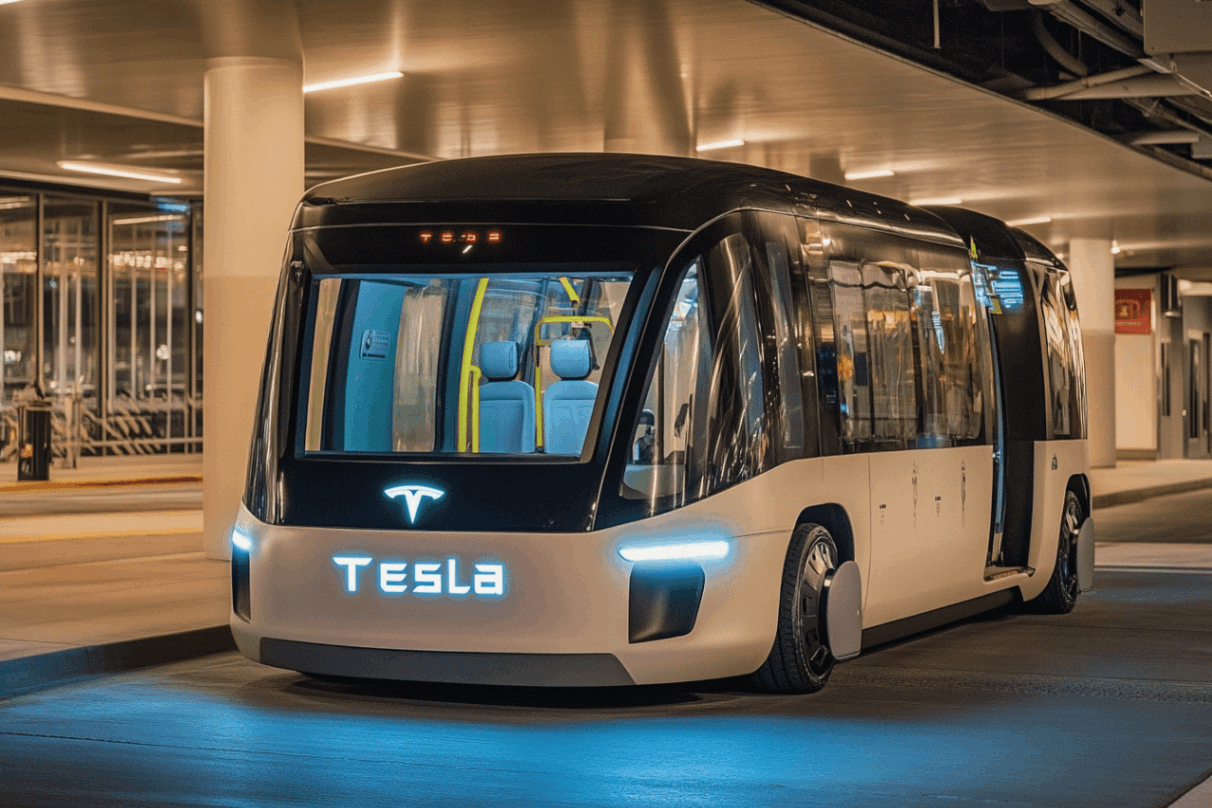
The bus will be equipped with an array of sensors, cameras, and radar systems that allow it to “see” its surroundings in real-time. These systems will work in tandem with advanced AI to detect pedestrians, other vehicles, road signs, and hazards, ensuring that the bus can operate safely in a variety of environments. The result is a system that could potentially eliminate human error and reduce traffic-related accidents, providing safer transportation for everyone.
The Impact on Public Transit
If Musk’s vision becomes a reality, it could dramatically transform public transit systems around the world. For decades, traditional buses have been a staple of urban transit, but they rely on human drivers, which can lead to delays, inefficiencies, and safety concerns. By removing the human element, Tesla’s autonomous buses could operate more smoothly, following optimized routes and schedules, ensuring that passengers reach their destinations faster and more reliably.
Moreover, the elimination of human drivers would allow cities and municipalities to allocate resources more effectively. Public transportation systems could operate 24/7 without worrying about driver shortages, labor costs, or fatigue. Additionally, the potential for greater frequency of buses and the ability to adjust routes based on real-time data could further increase convenience for commuters, making public transportation more appealing and accessible.
Sustainable and Efficient
As with all of Musk’s ventures, sustainability is a central theme in the Tesla Self-Driving Bus. With electric vehicles already central to Tesla’s business model, the self-driving buses will run on clean, renewable energy, helping cities reduce their overall carbon emissions. Unlike traditional buses that rely on fossil fuels, Tesla’s buses would be powered by electric motors, helping to clean up air quality, especially in densely populated urban areas.
Additionally, the use of electric buses could lead to a significant reduction in operational costs over time. Electric buses require less maintenance than their gas-powered counterparts, and the cost of charging them would be lower than the cost of fuel. This could result in lower fares for passengers and more affordable options for municipalities to run their transit systems.
The Future of Transportation
Musk’s self-driving bus concept is part of his broader vision for a world with fully integrated, autonomous, and sustainable transportation systems. Tesla’s work in electric vehicles, combined with SpaceX’s ventures into space, Neuralink’s advances in brain-machine interfaces, and The Boring Company’s underground transportation solutions, all hint at a future where our daily commute may be radically different from what we experience today.
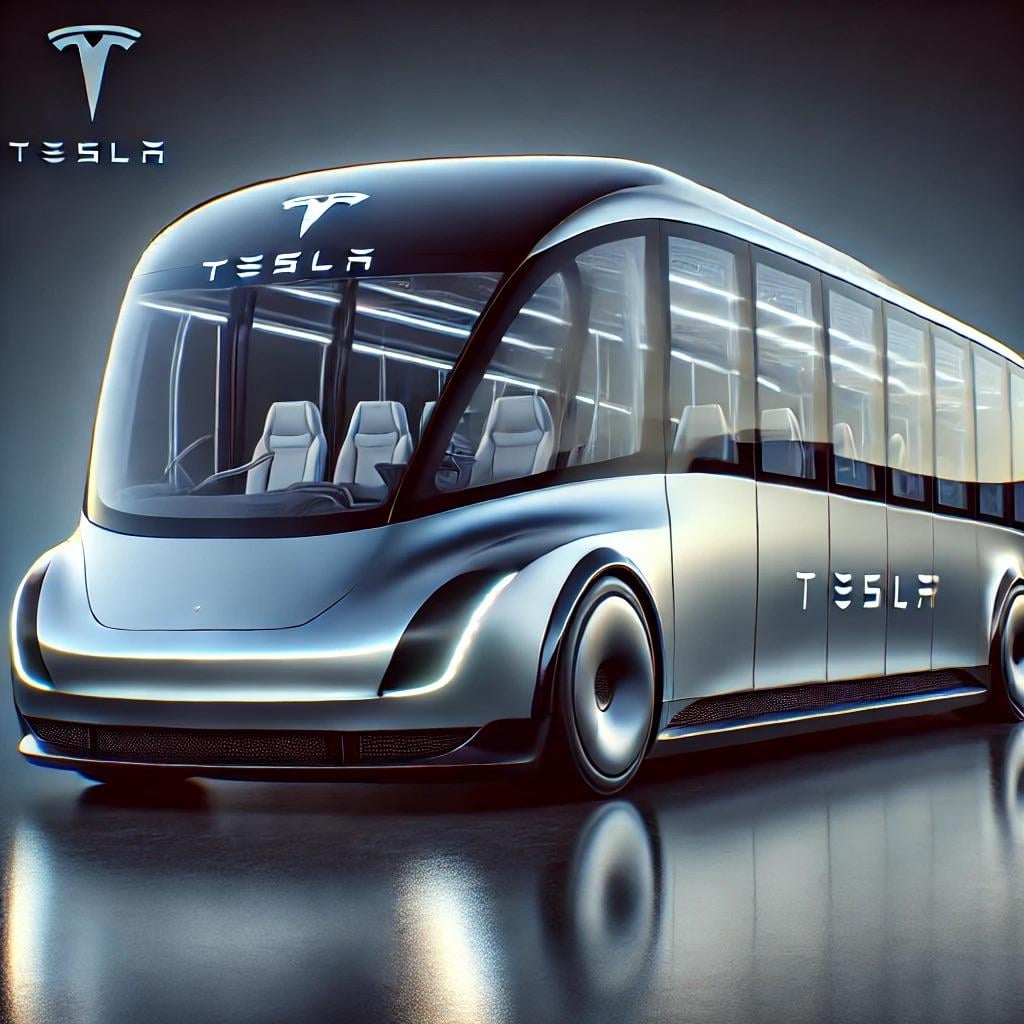
While the Tesla Self-Driving Bus is still in its conceptual phase, the implications are profound. If realized, it could reduce congestion in major cities, enhance public transportation efficiency, and dramatically decrease our dependence on fossil fuels. Musk’s track record of turning ambitious ideas into reality suggests that the future of transportation could look very different—faster, cleaner, and more intelligent than ever before.