Ever find yourself staring down at your patchy, sunburned lawn thinking, “There has to be a better way than spending every weekend mowing, watering, and wondering why it still looks sad?”Yeah… you’re definitely not alone.The classic turf lawn is a thirsty, sun‑burned patch of high‑maintenance green that demands more than it gives back. It doesn’t feed birds, it doesn’t shelter bees, and it certainly doesn’t crowd out weeds like it promises to.Across the U.S., turf still soaks up a jaw‑dropping 9 billion gallons of water every day, making it the country’s largest irrigated crop — yep, it beats out corn and wheat. All that watering, mowing, and fertilizing just to keep something alive that feeds literally no one.And while we’re babying our lawns, pollinators are in crisis. This year alone, nearly 70% of honeybee colonies were lost — the worst decline ever recorded. One in five native pollinators teeters on the edge of extinction.Why? Because our quest for “perfect lawns” has turned neighborhoods into chemical deserts with nothing for bees, butterflies, or birds to eat or live in.The good news? You don’t have to give up your yard or let it turn wild to help. You can still have a lush, soft, walkable lawn that actually helps the planet. The secret lies in native, low-growing groundcovers — living carpets that bloom, feed bees, crowd out weeds, and stay gentle under bare feet. Plants like clover, self-heal, and creeping thyme don’t just survive foot traffic; they thrive on it.So if your grass feels more like a chore than a joy, maybe it’s time to trade “perfect” for alive.
Here are 12 bee‑friendly lawn alternatives that handle foot traffic, stay lush year‑round, and remind you what a living yard is supposed to sound like.
1: White Dutch Clover (Trifolium repens)
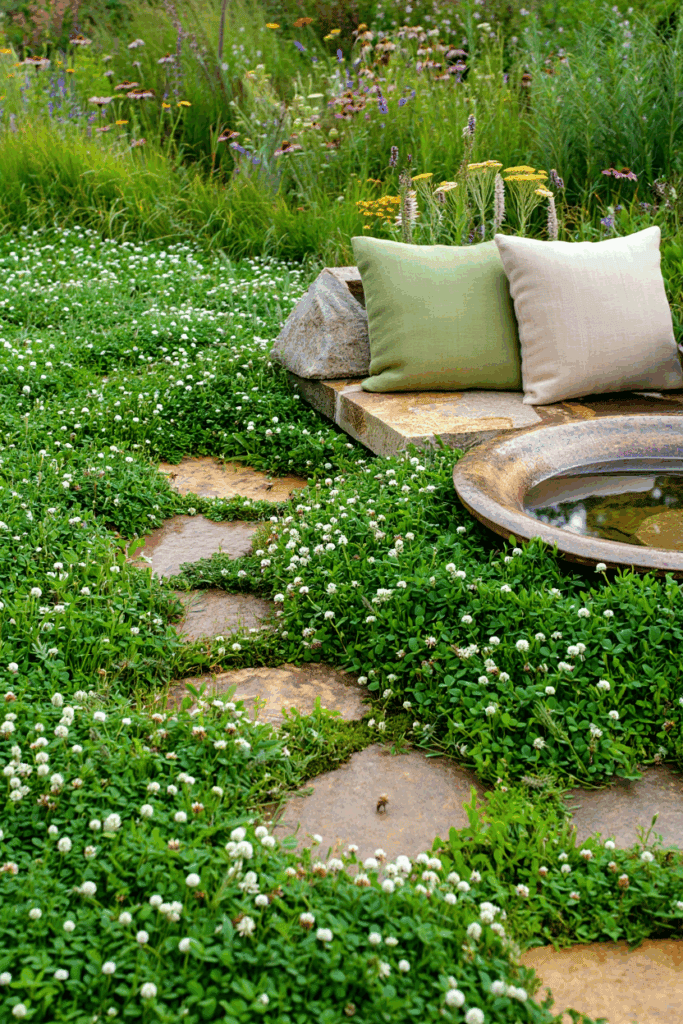
If you’re dreaming of a lawn that stays green, feeds bees, and feels soft under your feet, White Dutch Clover is the gold standard. Thriving in USDA Zones 3 through 10, it grows just 3–6 inches tall and spreads quickly through low, creeping stems that fill thin spots naturally. It prefers full sun to partial shade and loves cool, moist climates, but once it’s established, it handles heat and drought better than most turfgrasses.
What makes it a gardener’s favorite is how low-effort and high-reward it is. Clover pulls nitrogen from the air and stores it in the soil, so it keeps itself (and nearby plants) well-fed without fertilizer. Those little white blooms—appearing from late spring to early fall—are a magnet for honeybees and native bees, keeping your yard buzzing with life.
Light foot traffic? It loves it. Heavy? It bounces back quickly, even from pets and play. Plus, it naturally resists weeds and erosion while cutting your mowing time in half. In short, if you want a resilient, eco-friendly lawn that still looks lush and inviting, White Dutch Clover more than earns its place.
2: Creeping Thyme (Thymus serpyllum)
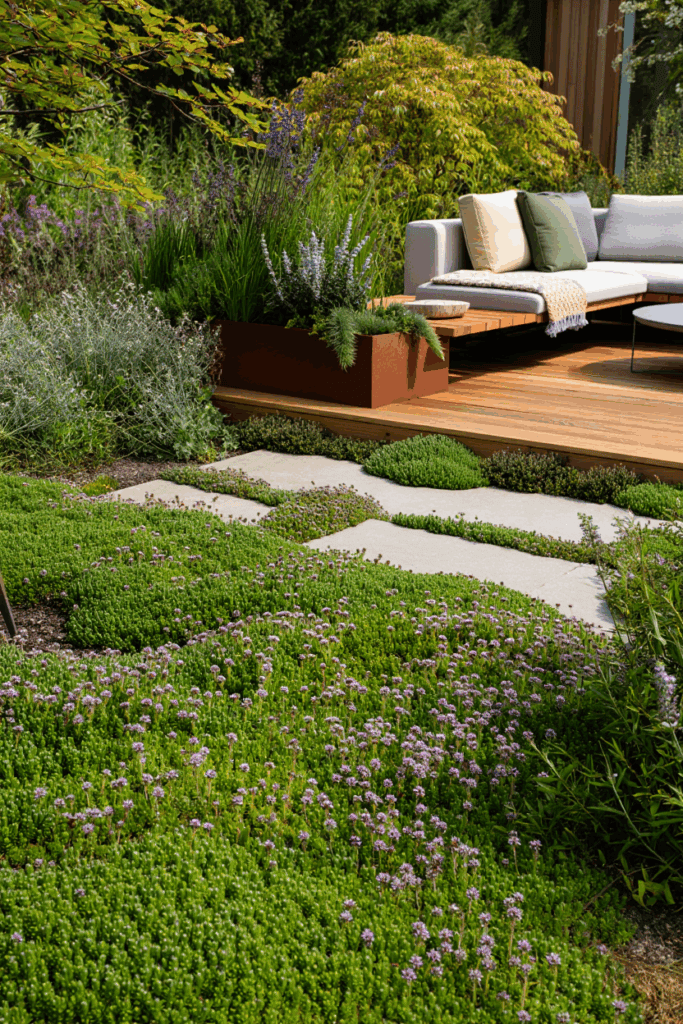
If you love the idea of a living carpet that smells heavenly every time you walk across it, Creeping Thyme is your plant. Hardy in USDA Zones 4 through 9, this sun-loving perennial forms a tight mat of tiny, fragrant leaves that never needs mowing. It spreads gently, filling gaps between stepping stones or covering small yards with a soft texture that looks like fine turf from afar.
Once it’s established, this plant is practically indestructible. It thrives in poor, well‑drained soil, laughs off drought, and handles light to moderate foot traffic—actually releasing an herbal scent with every step. Each spring and summer, it bursts into a haze of bee‑magnet pink or purple blooms, drawing native bees, hoverflies, and butterflies while resisting deer and rabbits naturally.
Choose low varieties like ‘Elfin’ or ‘Woolly’ Thyme for the densest lawn look. They stay below three inches tall and hug the earth tightly, making them perfect for pathways, cottage-style lawns, or dry slopes. Creeping Thyme is one of those plants that gives more than it takes—low water, no fertilizer, full fragrance, and endless charm.
3: Microclover (Trifolium repens var. ‘Pirouette’)

If grass lawns had a smarter cousin, this would be it. Microclover looks just like a fine, velvety green turf, but it quietly works overtime below the surface. In USDA Zones 4 through 9, it forms dense mats of tiny round leaves that stay low—about three inches tall—and keep that tidy “mowed” look without lifting a finger. It loves full sun but tolerates light shade and stretches easily into lawn pockets where grass normally thins out.
This little legume feeds itself by pulling nitrogen straight from the air and depositing it into the soil, so it keeps your yard rich and even helps nearby plants grow better. It blooms less than regular clover, meaning fewer bees underfoot if you’re barefoot, but still enough to keep pollinators visiting. It’s also surprisingly resilient—foot traffic, dogs, summer heat, even neglect—Microclover just shrugs it off and keeps the green coming.
Think of it as the modern eco-lawn: soft, uniform, alive, and always greener than your neighbor’s turf (without the fertilizer bill).
4: Self-Heal (Prunella vulgaris)
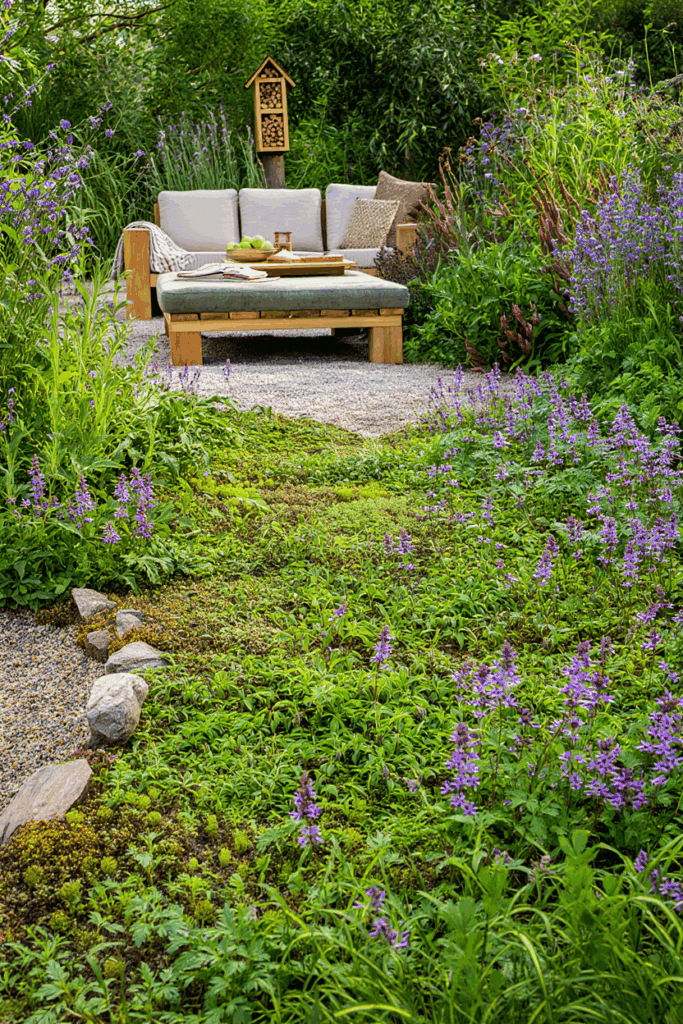
Here’s a wildflower with the soul of a lawn. In USDA Zones 3 through 9, Self-Heal (also called Heal-All) creeps low to the ground, weaving a soft blanket of green that bursts into purple spires from late spring straight through fall. Each bloom hums with bees, butterflies, and hoverflies, turning even a small yard into a pollinator pit-stop.
This native perennial loves full sun to partial shade and isn’t picky about soil. It handles mowing, bouncing back after each cut, and responds beautifully to light foot traffic—as if it enjoys being part of the daily rhythm of your yard. Once it settles in, it’s drought-tough, weed-smothering, and capable of naturalizing into a steady, no-fuss groundcover that looks intentional rather than wild.
If you like your lawn with a splash of color and a dose of purpose, Self-Heal is that quietly brilliant friend who keeps the garden buzzing without ever asking for attention.
5: Blue Star Creeper (Isotoma fluviatilis)

Step on this plant once, and you’ll understand why gardeners can’t stop talking about it. Blue Star Creeper grows in USDA Zones 5 through 9 and hugs the ground at a dainty 2 to 3 inches tall, weaving a soft, green carpet dotted with tiny sky‑blue flowers from spring through summer. It’s one of the few lawn alternatives that actually likes being walked on—thriving between stepping stones, around patios, or across small sunny lawns.
This hardy evergreen spreads quickly, filling gaps with velvety leaves that rebound after every stride. It thrives in full sun to partial shade and handles most soils as long as they drain well. While not native to North America, it’s easygoing and visually stunning—a pollinator magnet for early bees who appreciate the steady bloom cycle.
If your dream yard looks like a natural meadow but feels like a maintained courtyard, Blue Star Creeper gives you both: charm, color, and that springy turf feel underfoot.
6: Buffalo Grass (Bouteloua dactyloides)

Native to the Great Plains and hardy in USDA Zones 4 through 8, Buffalo Grass is the tough prairie native that proves how beautiful “low maintenance” can be. Its fine, silver‑green blades naturally curl and drape to about 4 to 6 inches high, forming a soft, wavy lawn that looks effortlessly neat without mowing.
What sets this grass apart is its deep root system—stretching four to six feet into the soil. That means it stays green on barely an inch of rain a month, rescues compacted soils, and shrugs off the harsh, dry heat that fries traditional lawns. It thrives in full sun and dry, alkaline soil, making it perfect for anyone wanting to ditch irrigation systems and chemical fertilizers for good.
While it doesn’t love constant, heavy play, Buffalo Grass handles moderate foot traffic beautifully and comes back strong even after summer droughts. Give it a sunny patch, and it rewards you with a soft, native lawn that feels both natural and nostalgic—the same turf that once cushioned herds of bison across the plains.
7: Lyreleaf Sage (Salvia lyrata)

Lyreleaf Sage is the wildflower that sneaks into lawns and makes you wonder why it isn’t planted on purpose more often. Native across much of the eastern U.S. and hardy in USDA Zones 5 through 9, this hardy perennial forms a rosette of lyre-shaped leaves, staying low through most of the year. Then, come spring, it sends up slender spikes covered in blue to lavender blooms—each one rich with nectar that brings in bees, butterflies, and even hummingbirds.
It thrives in sun to part shade, handling anything from dry sandy patches to soggy rain garden edges. Feel free to mow it—it pops right back, seeding modestly to fill empty spots with soft greenery. Once established, it’s drought-tough, flood-tolerant, and happy to mingle with turf without looking wild or messy.
If your idea of a perfect yard is one that buzzes with life but stays easy to care for, Lyreleaf Sage hits that sweet spot—part wildflower, part living art.
8: Pennsylvania Sedge (Carex pensylvanica)

If lawns had a woodland version, Pennsylvania Sedge would be it. Hardy in USDA Zones 3 through 8, this native sedge thrives where most turf grasses give up—shaded yards, dry soil, and under tall trees. It forms fine, arching tufts of bright green blades, just 6 to 8 inches high, creating the look of a graceful meadow floor that never needs mowing more than once or twice a year.
It’s soft underfoot, quietly elegant, and so easy to live with. Once established, Pennsylvania Sedge asks for very little—no fertilizer, no irrigation, and very few weeds. By early summer, it produces tiny golden seed heads that wave like natural ornamentation. Its dense root system helps curb erosion, and it quietly nourishes the ecosystem by feeding the larvae of dozens of native moths and butterflies.
If your yard has dappled light or tricky tree shade, this is the lawn alternative that thrives where others sulk. Think minimalist green with maximum ecological payoff.
9: Narrowleaf Blue‑Eyed Grass (Sisyrinchium angustifolium)
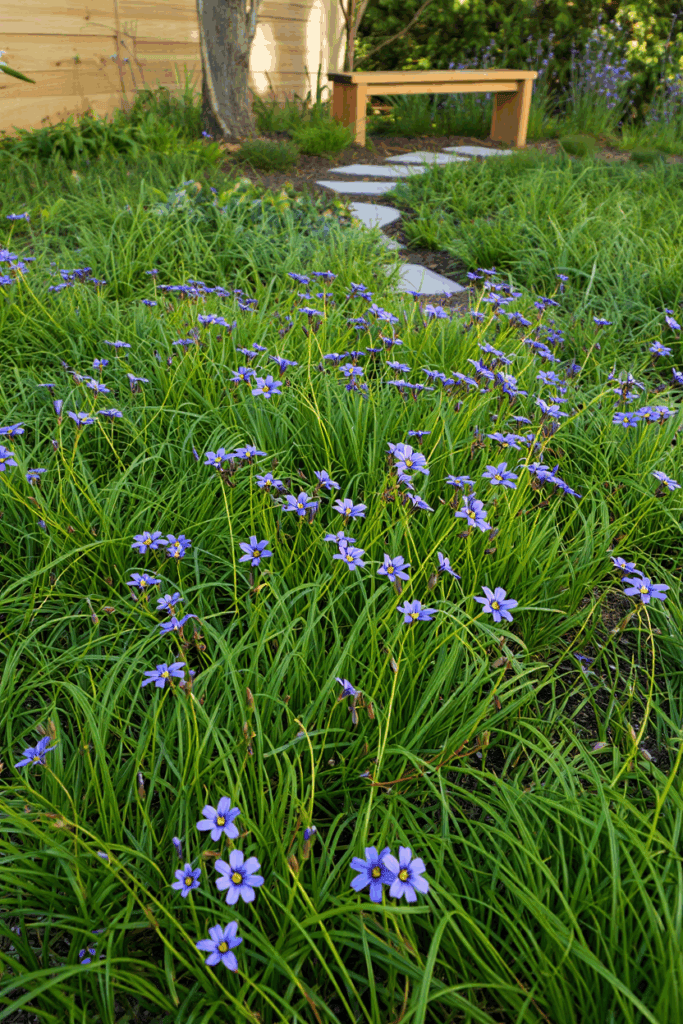
Despite its name, this isn’t a grass at all—it’s a tiny iris cousin dressed up as one. Hardy in USDA Zones 4 through 9, Narrowleaf Blue‑Eyed Grass forms graceful clumps only 6 to 12 inches tall, with slender green blades that blend right in with meadow turf. In spring and early summer, it surprises you with delicate, violet‑blue flowers that open in morning sunlight and close by dusk, feeding bees and small native pollinators.
It thrives in moist, well‑drained soil and full sun to part shade, naturalizing slowly into soft patches that look intentionally cultivated but feel wild and relaxed. It tolerates light foot traffic and mowing, so you can mix it right into bee‑lawn blends or meadow‑style lawns for a pop of seasonal bloom.
Think of Blue‑Eyed Grass as the poet’s version of a lawn—quiet, low‑care, and unexpectedly lovely when the light catches it just right.
10: California Frogfruit (Phyla nodiflora)
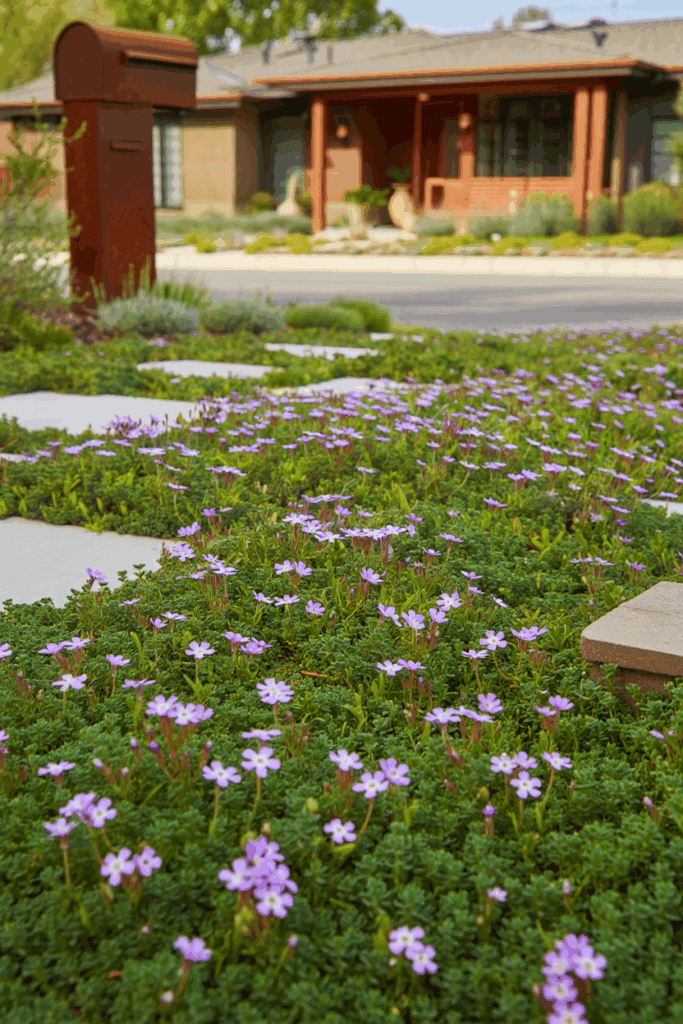
This plant is the quiet superhero of tough, eco‑friendly lawns. Native to the southern U.S. and hardy in USDA Zones 7 through 11, California Frogfruit (also called Turkey Tangle Fogfruit or Creeping Lippia) looks unassuming at first—low, green, and soft underfoot—but proves nearly indestructible once established. It hugs the ground at 1 to 3 inches tall, creating a dense mat that rarely needs mowing and bursts into clusters of tiny lavender‑white flowers beloved by bees and butterflies.It flourishes in full sun and well‑drained soil, thrives in heat, and stays green even through mild drought. Light to moderate foot traffic doesn’t faze it, so it’s great for family yards or sunny edges of patios. If you’ve got a yard that bakes in summer and you’re tired of grass that wilts by July, Frogfruit will give you the same smooth look—only with far more pollinator action and almost no upkeep.This groundcover is the “barefoot lawn” dream for warm‑climate gardeners who want beauty with brains.