There is nothing worse than watching your hard-earned vegetables rot on the counter because you cannot eat them fast enough. While canning is great, it heats up the kitchen, and freezing takes up valuable space. The oldest, most energy-efficient method of preservation is dehydration. You can harness the power of the sun to dry your herbs, fruits, and veggies for free with a simple outdoor cabinet.
The Concept A solar drying cabinet is essentially a breathable safe house for your food. The structure consists of a simple wooden frame fully enclosed in mesh screening. This design allows warm breezes to pass through, wicking away moisture from your produce, while the screen keeps flies, bees, and other pests from snacking on your harvest. Unlike electric dehydrators, this runs entirely on natural energy.
Building the Frame You can build the frame using basic furring strips or inexpensive lumber. The goal is to create a tall, narrow box with a hinged door on the front. Inside the box, install horizontal runners—thin strips of wood attached to the sides—spaced a few inches apart. These runners act like the racks in your oven, holding the drying trays in place and allowing you to stack multiple layers of food at once.
Making the Trays The trays are the most critical component. Build simple wooden frames that fit loosely inside your cabinet width. Staple food-safe screening or hardware cloth across the bottom of each frame. This mesh bottom is vital because it allows air to circulate underneath the food, ensuring it dries evenly without mold forming on the bottom side.
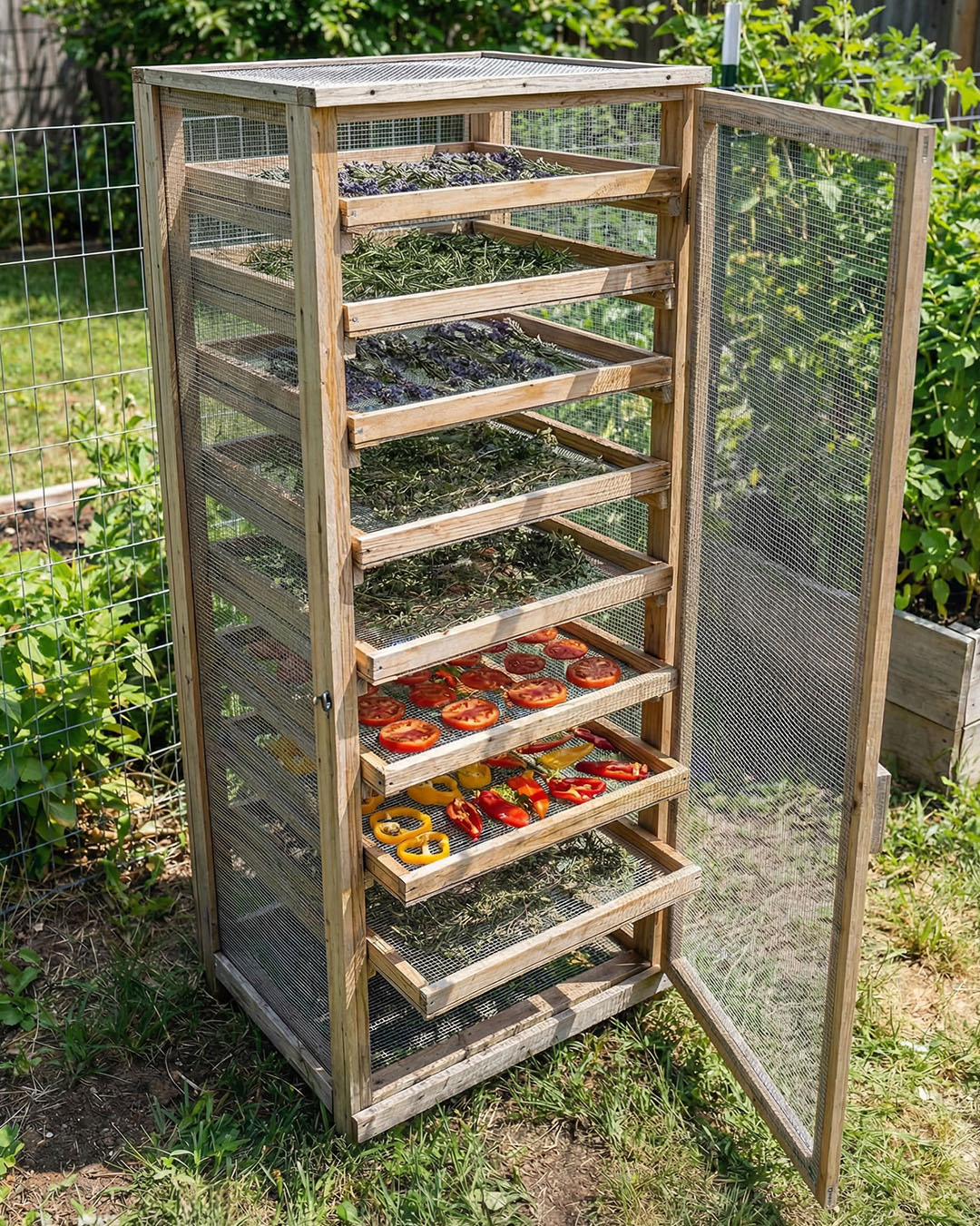
Placement and Use Place your finished cabinet in a sunny, breezy spot in your yard. The natural heat of the sun will gently dehydrate sliced apples, tomatoes, peppers, and herbs over the course of a day or two. Because the cabinet is vertical, it takes up very little space in the garden while processing a large amount of food. This method preserves the color and flavor of your harvest perfectly without adding a cent to your utility bill.