Companion planting is often described as nature’s original pest control system. Instead of fighting against insects and poor soil with chemicals, you can simply arrange your plants so they help each other survive. There is a specific four-plant combination that is widely considered the gold standard for a healthy summer garden: tomatoes, peppers, basil, and marigolds. When grown together in a single bed, these four create a mini-ecosystem that boosts yields and keeps the bad bugs away.
The First Line of Defense The secret weapon in this layout is the marigold. While often planted just for their looks, these bright orange and yellow flowers are actually hard-working security guards. They exude a scent that many garden pests, such as aphids and mosquitoes, find repulsive. More importantly, their roots release a chemical that helps suppress harmful nematodes in the soil. By planting a dense ring of marigolds around the outer edge of your garden bed, you create a protective barrier that shields the vulnerable vegetables inside.
The Flavor Enhancers Tucked inside the protective ring of flowers, basil serves a dual purpose. Many gardeners swear that growing basil next to tomatoes actually improves the flavor of the fruit, making it sweeter and more robust. Beyond the culinary connection, basil acts as a secondary layer of pest control. Its strong, spicy aroma confuses pests like thrips and tomato hornworms, masking the scent of the vegetables so the insects have a harder time finding their target.
The Heavy Hitters The center of the bed is reserved for the main crops: tomatoes and peppers. These two are members of the nightshade family and thrive in similar conditions, loving full sun and heat. Because tomatoes grow tall and require staking, they are best placed in the back or center of the bed where they won’t shade out the shorter plants. Their foliage creates a humid microclimate below, which helps the peppers and basil retain moisture during hot summer days.
Why This Layout Works Peppers, while sturdy, can be brittle. By planting them nestled between the basil and the tomatoes, they are protected from strong winds that might snap their stems. Furthermore, the marigolds attract pollinators like bees and butterflies. Since peppers and tomatoes are self-pollinating but benefit greatly from wind and insect activity, having a high volume of pollinators buzzing around the marigolds increases the fruit set for your vegetable plants.
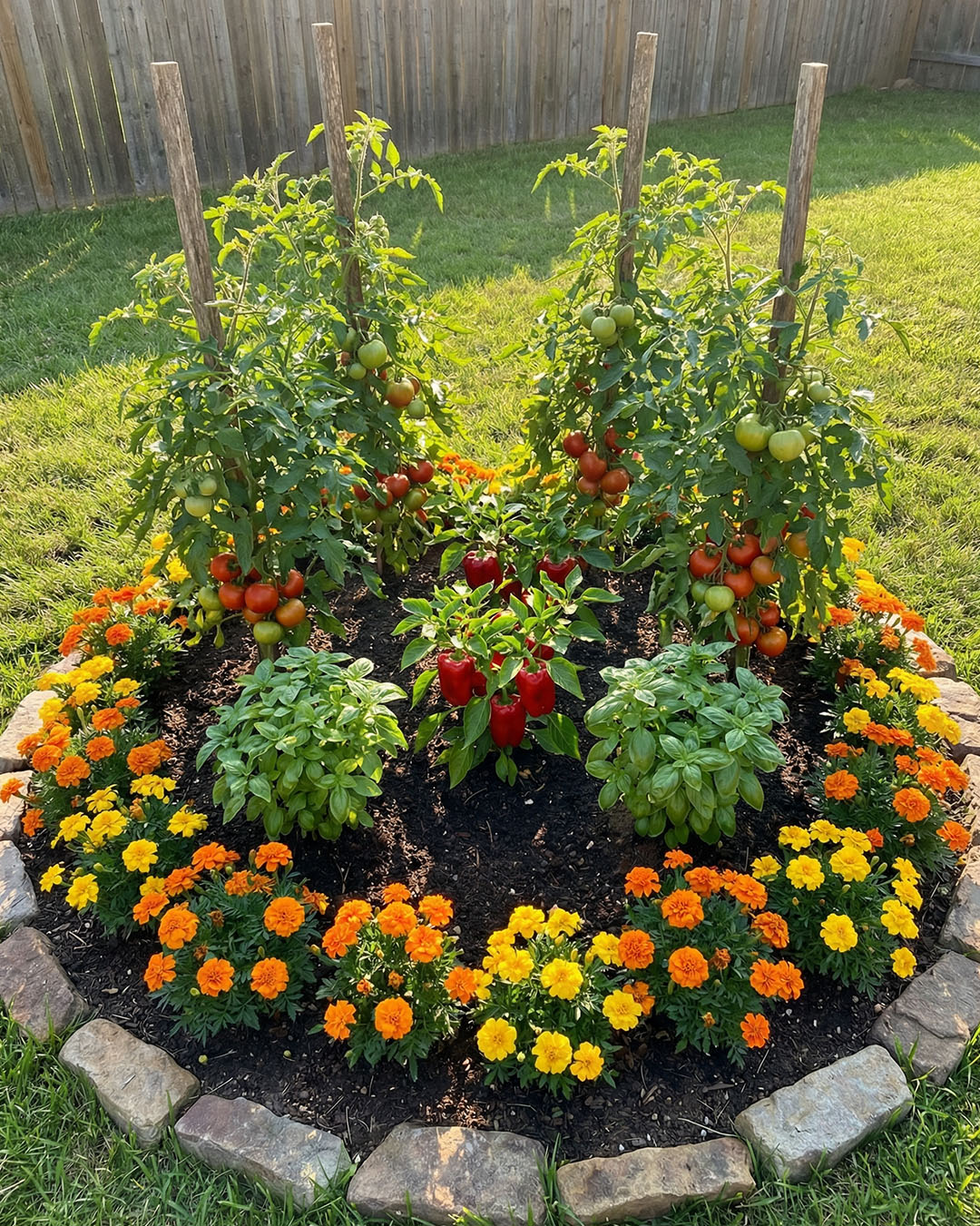
Tips for Success When planning this bed, ensure you give the tomatoes enough vertical support. As they grow upward, you want to keep the leaves off the ground to prevent blight. Keep the basil bushy by pinching off the flower heads regularly; this forces the plant to put energy into leaf production rather than seeds. Finally, keep the marigolds deadheaded. The more you remove the spent blooms, the more they will flower, ensuring your defensive wall stays strong all season long.