If you love your dogs but hate what they do to your delicate perennials, you don’t need to banish them from the yard entirely. The solution is to zone your landscape by creating a “garden within a garden.” By enclosing a specific section of your yard with a charming picket fence, you create a protected sanctuary where fragile blooms can thrive without being trampled, dug up, or peed on. This structure doesn’t just serve as a barrier; it acts as an architectural frame that turns a patch of flowers into a distinct, destination “room” that feels intimate and peaceful.
The “See-Through” Picket Barrier To keep the space feeling open rather than fortress-like, choose a classic picket fence design with spacing between the slats. Use natural, untreated cedar or pressure-treated pine that will weather to a soft, silvery gray over time. This weathered look blends seamlessly with the foliage, unlike bright white vinyl which can look plastic and artificial. Ensure the fence is at least 36 to 42 inches high—tall enough to discourage most dogs from jumping over, but low enough that you can still enjoy the view of the flowers from your deck or kitchen window.
Laying the Flagstone “Carpet” A sanctuary needs a floor. Instead of pouring concrete or laying tight pavers, install an irregular flagstone pathway with wide, intentionally green joints. Select large, flat fieldstones in tan and gray hues to complement the wooden fence. Lay them on a sand base, leaving two-to-three-inch gaps between each stone. This permeable design prevents water runoff issues and allows you to plant creeping thyme or durable turf in the cracks, softening the hardscape and enhancing the “secret garden” aesthetic.
The Cottage Planting Strategy Because this area is protected from foot traffic, you can plant with reckless abundance. Aim for a “cottage garden” style where plants spill over the edges of the path. Anchor the corners with structural shrubs like white hydrangeas or boxwoods. Fill the middle layers with reliable perennials like pink coneflowers (Echinacea), salvia, and daylilies. The goal is to create dense layers of foliage that suppress weeds and create a lush, immersive experience once you step through the gate.
Anchoring the View Every room needs a centerpiece. In a small enclosed garden, a central water feature acts as a focal point that draws the eye and invites wildlife. Place a classic stone birdbath right in the middle of a planting bed or at a crossroads in your path. Surrounding it with lower-growing plants ensures it remains visible from outside the fence. This simple addition introduces the soothing sound of splashing water and the movement of birds, heightening the sense of tranquility in your protected oasis.
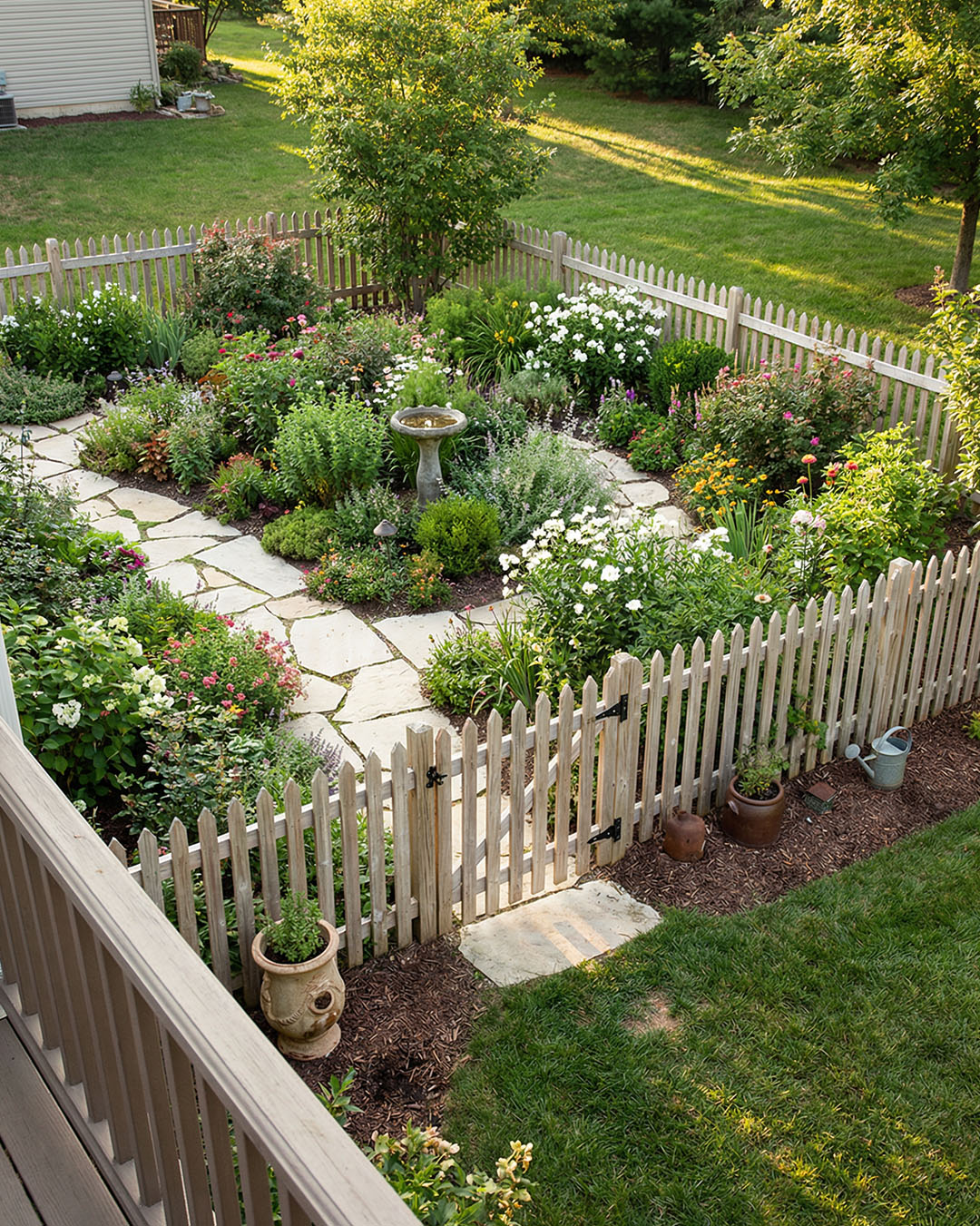
The Welcoming Entryway The gate is the handshake of your garden. Install a sturdy wooden gate that matches the fence style, equipped with heavy-duty black iron strap hinges and a reliable latch. This hardware not only adds a rustic, farmhouse detail but ensures the gate swings shut securely behind you, keeping your four-legged friends safely on the lawn and your prize-winning blooms safe inside. Place a few terracotta pots filled with herbs or annuals at the entrance to signal that this is a special, curated space.