For decades, gardeners have been told to cart their kitchen waste to a pile in the corner of the yard, wait six months for it to rot, and then cart it back to the garden. This is inefficient and unnecessary. The most powerful way to fertilize your garden is “trench composting,” a method that cuts out the middleman and delivers nutrients directly to the root zone. By burying your organic waste right in the center of your raised beds, you turn your garden soil into an active, self-feeding worm farm that fuels explosive plant growth without you ever buying a bag of fertilizer.
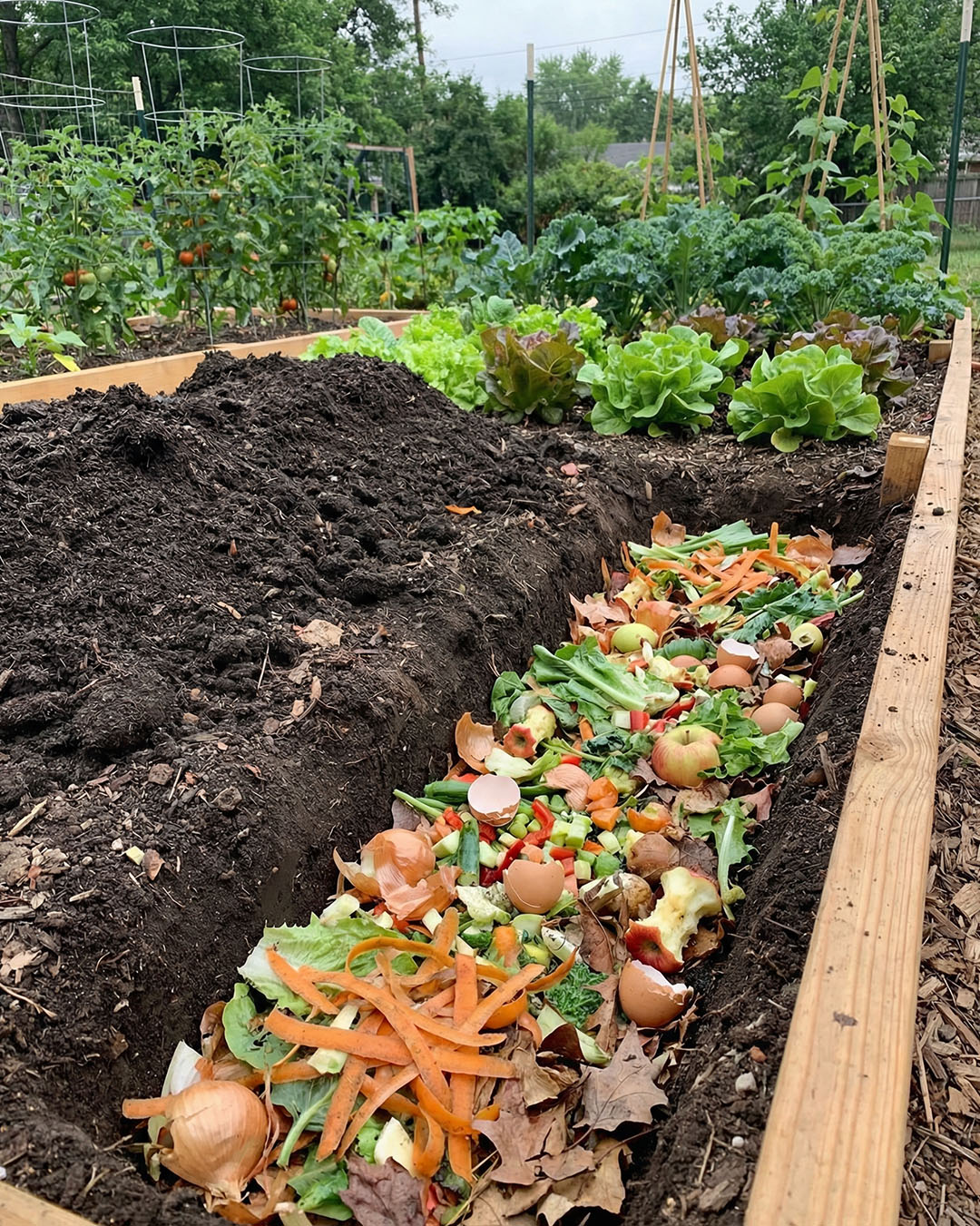
The “Center-Spine” Excavation To implement this system in an active garden bed, you need to think about your layout before you plant. Instead of broadcasting seeds across the entire surface, plant your crops in wide rows along the outer edges of the bed. This leaves the center open for your “fuel line.” Dig a trench roughly eight to twelve inches deep down the middle of the bed, piling the excavated soil along the sides. This trench becomes the dedicated digestion zone, safely separated from the plant stems but close enough for roots to tap into.
Filling the Reservoir Once your trench is ready, you can empty your kitchen compost pail directly into the ground. As seen in successful setups, this is the place for nitrogen-rich vegetable peelings, calcium-packed eggshells, apple cores, and spent greens. The diversity of waste is key; the vegetable matter provides moisture and nutrients, while firmer items like onion skins and fibrous stalks add structure. Avoid meat, dairy, or oils, as these attract pests, but pile in as much plant-based waste as the trench can hold.
The Critical Soil Cap The difference between a compost trench and a garbage pile is the cover. You must never leave the food scraps exposed to the air, or you will invite raccoons, flies, and odors. Immediately after filling a section of the trench, pull the excavated soil back over the waste, burying it completely under at least four inches of dirt. This soil “cap” acts as a bio-filter, trapping odors underground and creating the dark, damp environment that earthworms and beneficial microbes love.
Summoning the Underground Workforce The amazing part of this method happens unseen. The scent of the decomposing food acts as a dinner bell for earthworms, drawing them from the surrounding soil into the center of your bed. As they consume the waste, they tunnel through the root zones of your neighboring plants, aerating the soil and leaving behind worm castings—the purest, most potent fertilizer available. Your plants, sensing the nutrient density nearby, will send their roots inward toward the trench, tapping into a constant supply of moisture and food that keeps them lush and productive all season long.