Be honest: Do you spend more time dragging hoses around the yard than actually harvesting? 
 Tell us in the comments if you’d be willing to haul logs and shovel dirt now to save water later, or if that looks like too much of a workout!
The “Hill Culture” Secret “Hügelkultur” (German for “hill culture”) is the ultimate lazy gardener’s hack disguised as a permaculture science project. Instead of burning fallen trees or hauling brush to the dump, you bury it. By mounding soil over a core of rotting wood, you create a massive biological sponge. As the wood decays underground, it holds substantial amounts of rainwater, releasing it slowly to the roots during dry spells. In many climates, a mature Hügelkultur mound requires zero irrigation after the first year.
Layering the Lasagna The construction starts on a flat patch of ground (or a shallow trench) where you stack your largest, oldest logs. Hardwoods like oak, maple, or apple are best; avoid cedar or walnut which can inhibit plant growth. Pile smaller branches and twigs on top of the heavy timber to fill the air gaps. Next, pack organic matter like grass clippings, straw, or manure into the crevices. Finally, cover the entire mountain with a thick layer of topsoil and finished compost, shoveling it into a steep, stable mound.
The Slow-Release Fertilizer Factory This isn’t just a water tank; it’s a nutrient engine. As fungi and bacteria break down the wood core, they generate heat, which extends your growing season by warming the soil earlier in spring and keeping it active later into autumn. The decaying carbon slowly releases nitrogen, potassium, and phosphorus directly to the feeder roots, meaning you never have to add chemical fertilizers. The mound actually gets richer and more fertile every single year it sits.
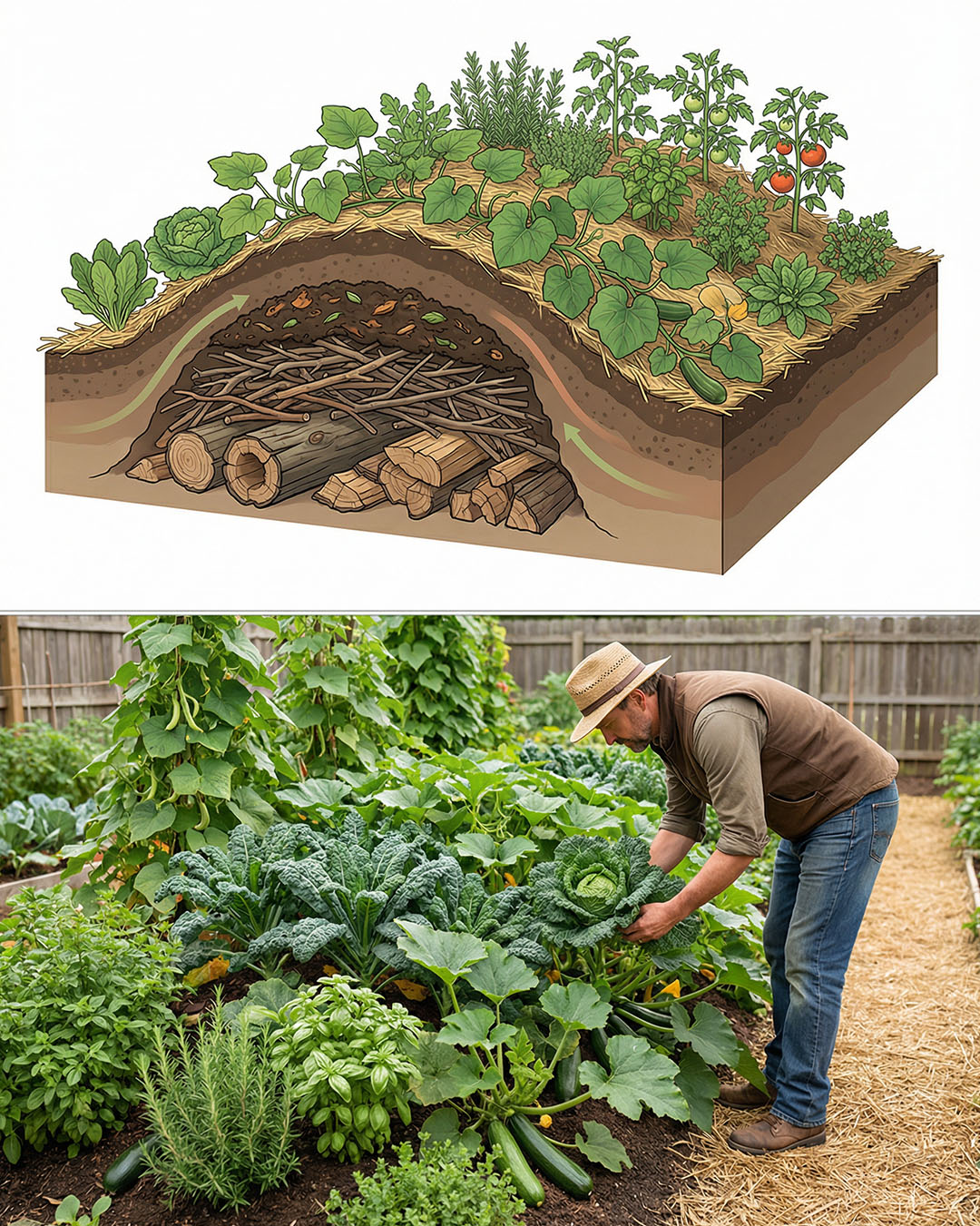
What to Plant on the Hill Because these mounds are nutrient-dense and moisture-retentive, they are perfect for “hungry” crops. Squash, pumpkins, and melons thrive here, their vines scrambling happily down the slopes. Deep-rooted vegetables like potatoes maximize the vertical soil volume, while heavy feeders like kale, tomatoes, and corn tap into the composting core for explosive growth. Just remember that the mound will settle over time as the wood rots, so it is a living, evolving landscape feature.