Part 1: The Day My World Changed
The first time I held my three grandbabies, I thought my heart would burst with joy.
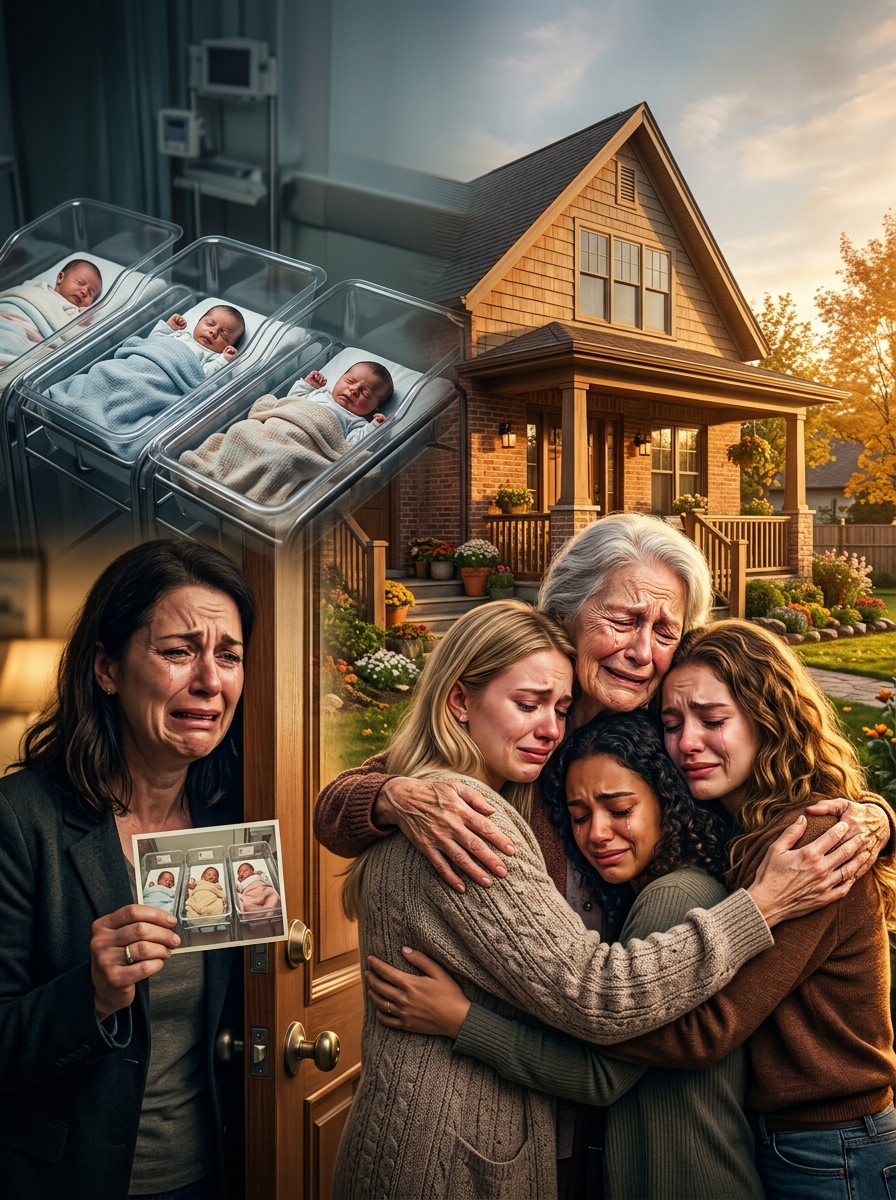
Three tiny girls.
Three perfect little miracles.
Emma, Grace, and Sophie were born just minutes apart on a rainy October morning. They were small, fragile, and wrapped in matching pink blankets. The doctors warned us they would spend several weeks in the neonatal intensive care unit, but they were fighters from the very beginning.
My daughter, Olivia, had always dreamed of becoming a mother. She and her husband, Daniel, had spent years trying to have a child before finally learning they were expecting triplets.
We all believed it was the beginning of a beautiful new chapter.
Instead, it became the day our family fell apart.
The pregnancy had been difficult. Olivia was placed on bed rest for months, and after the emergency delivery, complications left her physically exhausted. The lack of sleep, constant worry, and overwhelming responsibility quickly took a toll on her mental health.
At first, we assumed she was simply adjusting.
Then she stopped smiling.
She barely spoke.
She stared at the babies without saying a word.
One evening, I found her sitting alone in the nursery with tears streaming down her face.
“I don’t think they need me,” she whispered.
I hugged her tightly.
“They need their mother.”
She shook her head.
“They deserve someone stronger.”
I begged her to let us help.
Daniel begged too.
We offered counseling, doctors, anything she needed.
She promised she would try.
But only three weeks after bringing the babies home, Olivia disappeared.
She left behind a short handwritten note.
“Mom, I’m sorry. I can’t be the mother they deserve. Please don’t look for me. Tell them I loved them enough to leave before I hurt them.”
There was no address.
No phone number.
No explanation.
She was simply… gone.
Daniel searched for months.
The police searched.
Private investigators searched.
Nothing.
It was as though she had vanished into thin air.
Six months later, Daniel was killed in a tragic highway accident while driving home from work.
In less than a year, those three little girls had lost both parents.
One to death.
The other to silence.
At fifty-eight years old, I became their guardian.
Then their legal mother.
People often told me I was too old to raise three toddlers.
I ignored them.
Love doesn’t retire.
For the next twenty years, my life belonged to Emma, Grace, and Sophie.
I attended every school play, every soccer game, every graduation ceremony, every heartbreak, and every celebration.
When they asked about their mother, I never lied.
“She loved you very much,” I always said.
“Then why did she leave?” Emma asked once.
I swallowed the tears burning in my throat.
“I don’t know.”
The truth was, I asked myself the same question every single day.
Part 2: The Stranger at the Door
The girls were twenty years old when everything changed.
They were home from college for Thanksgiving.
Our little house felt full again, just as it had when they were children.
That afternoon, the doorbell rang.
I expected a neighbor.
Instead, I saw a woman standing on the porch with silver beginning to streak through her dark hair. She looked older than her fifty-two years, worn by time and hardship.
She held a faded photograph in trembling hands.
“I don’t know if you’ll recognize me,” she said quietly.
But I already had.
“Olivia.”
The name escaped my lips before I could stop it.
She burst into tears.
“I’m so sorry.”
For a long moment, neither of us moved.
Then I stepped aside.
“Come in.”
The girls were laughing in the kitchen until they saw her.
The room fell completely silent.
No one had to explain who she was.
They knew.
Grace whispered first.
“Mom?”
Olivia covered her mouth as tears poured down her face.
“I’ve dreamed of hearing that word again for twenty years.”
Emma folded her arms.
“You don’t get to call yourself our mother.”
No one spoke.
Sophie’s voice finally broke the silence.
“Why?”
One word.
Twenty years of pain.
Olivia reached into her purse and placed a thick envelope on the table.
“My answer is in there.”
Inside were medical records, therapy reports, and hospital files dating back two decades.
She had suffered from severe postpartum depression with psychosis after the triplets were born.
At the time, very few people around us understood what was happening.
Ashamed and terrified she might accidentally harm her babies during one of her episodes, she believed leaving was the only way to keep them safe.
Instead of asking for help, she disappeared into a psychiatric treatment program under a different name.
Recovery took years.
By the time she was healthy enough to return, shame had convinced her that her daughters were better off without her.
So she watched from afar.
Every birthday.
Every graduation.
Every milestone.
She never approached.
She simply made sure they were safe.
“I drove past this house hundreds of times,” she admitted through tears.
“I watched Christmas lights from across the street.”
“I saw your first bicycle.”
“I watched you leave for prom.”
“I was there… but I wasn’t brave enough to knock.”
No one knew what to say.
Part 3: A Family Finds Its Way Back
The weeks that followed were filled with long conversations, painful questions, and quiet tears.
Emma remained angry.
“You made the choice for us.”
Grace struggled to forgive.
“I spent my whole childhood wondering what I did wrong.”
Sophie simply listened.
One evening, Olivia visited Daniel’s grave for the first time in twenty years.
She apologized aloud to the husband she had loved but abandoned.
The triplets stood quietly behind her.
No one interrupted.
Months passed before healing truly began.
It happened on Mother’s Day.
The girls invited me to brunch as they always did.
When I arrived, there were four place settings instead of three.
Olivia was already seated.
She looked nervous enough to leave.
Emma stood first.
“We’ve talked a lot.”
Grace nodded.
“We can’t get back the years we lost.”
Sophie’s eyes filled with tears.
“But we don’t want to lose the years we still have.”
Olivia began crying before they finished speaking.
Emma walked around the table and hugged her.
Grace joined them.
Then Sophie.
For the first time since they were newborns, Olivia held all three daughters in her arms.
I watched quietly from across the room.
Olivia looked at me through her tears.
“You raised them.”
“You loved them.”
“You gave them everything I couldn’t.”
“I don’t know how to thank you.”
I smiled.
“You already did.”
She looked confused.
“You came home.”
A year later, Emma married her college sweetheart.
When the wedding planner asked who would walk her down the aisle, Emma surprised everyone.
She took my hand.
Then Olivia’s.
“I have two mothers.”
“One gave me life.”
“The other gave me a childhood.”
“I won’t choose between them.”
Together, Olivia and I walked Emma down the aisle.
Years later, when the triplets became mothers themselves, they often told their children the story of their family.
Not as a story about abandonment.
But as a story about illness, forgiveness, resilience, and second chances.
They taught their children that love sometimes survives even when people fall apart.
They also taught them something just as important:
Mental illness is not a moral failure.
Asking for help is an act of courage.
And while twenty years can never be returned, love has a remarkable way of finding its way home—even after the longest journey.
Sometimes, the family you lose isn’t gone forever.
Sometimes, they’re simply waiting until they believe they deserve to come back.
And sometimes, the greatest miracle isn’t being born.
It’s being forgiven.