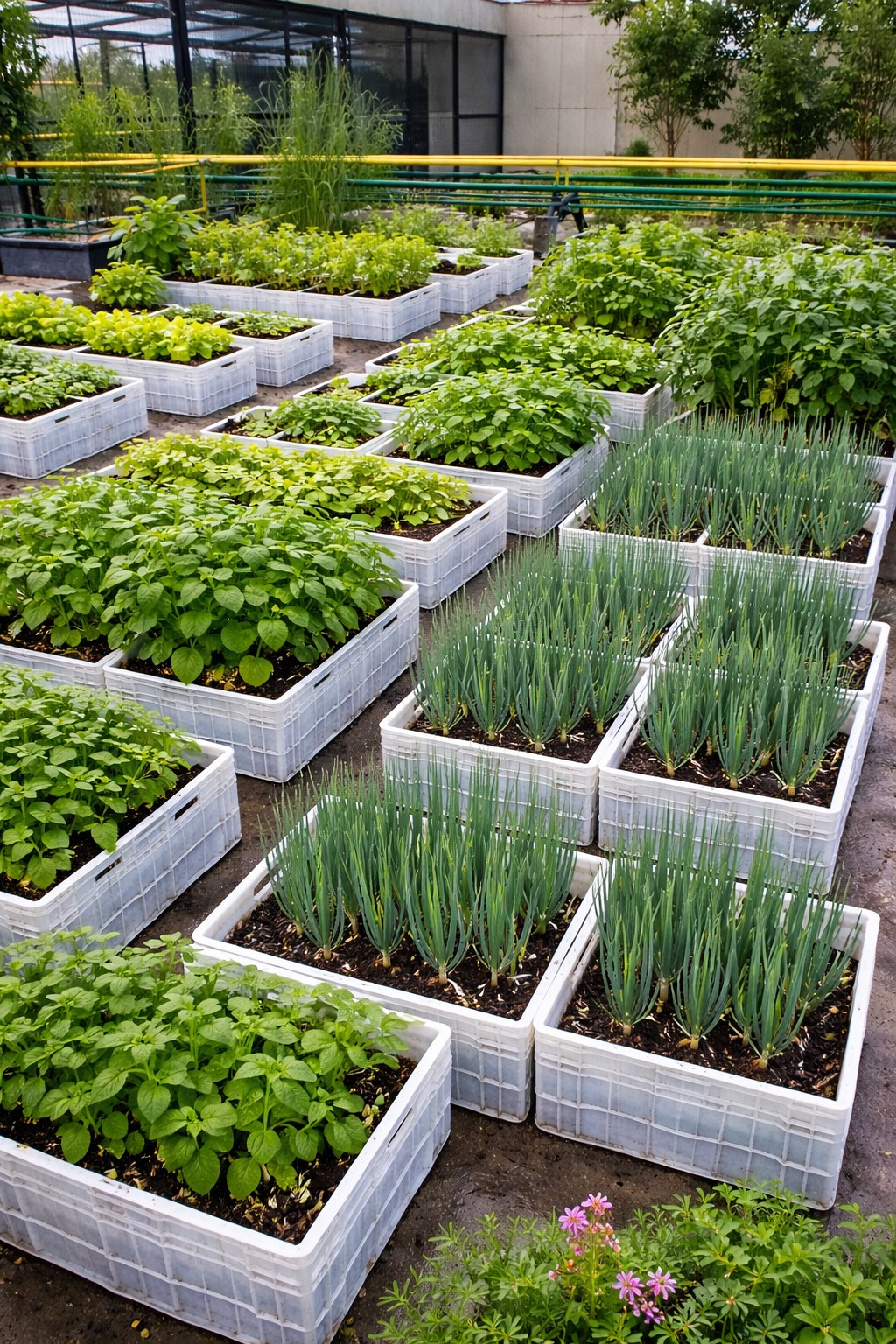
Rows of vibrant green plants stretch across a rooftop, contained in simple white crates yet full of life and purpose. This is agriculture reimagined—not in open fields or rural landscapes, but above the city itself, where concrete and infrastructure give way to soil, roots, and renewal.
This rooftop farm represents a shift in how we think about food production. Herbs, onions, leafy greens, and vegetables grow side by side in modular containers, carefully arranged for efficiency and accessibility.
The system is flexible and scalable, proving that meaningful food cultivation doesn’t require vast land—only thoughtful design and commitment.
What stands out is the contrast. Industrial pipes, railings, and urban structures frame the scene, while lush plants soften the environment with color and texture.
It’s a visual reminder that nature doesn’t disappear in cities—it adapts. Here, rooftops become productive landscapes, transforming unused space into sources of nourishment and resilience.
Beyond aesthetics, the impact is practical. Rooftop farms reduce food miles, provide fresher produce, and help regulate building temperatures.
They also reconnect people to the origins of their food, even in highly urbanized settings.
Tending plants becomes an act of mindfulness amid the rhythm of city life.
This approach to farming speaks to a future shaped by necessity and innovation. As populations grow and space becomes scarce, food systems must become more localized and adaptive.
Rooftop agriculture answers that challenge quietly, crate by crate, harvest by harvest.
More than a growing method, this rooftop farm is a statement.
It shows that sustainability doesn’t always require grand gestures—sometimes it begins with planting seeds where no one thought they could grow.