The underground greenhouse, often known as a walipini, is a powerful example of how simple design can harness natural forces to create sustainable food production.
By partially burying the structure into the earth, this greenhouse takes advantage of the ground’s stable temperature to maintain a warm, protected growing environment year-round.
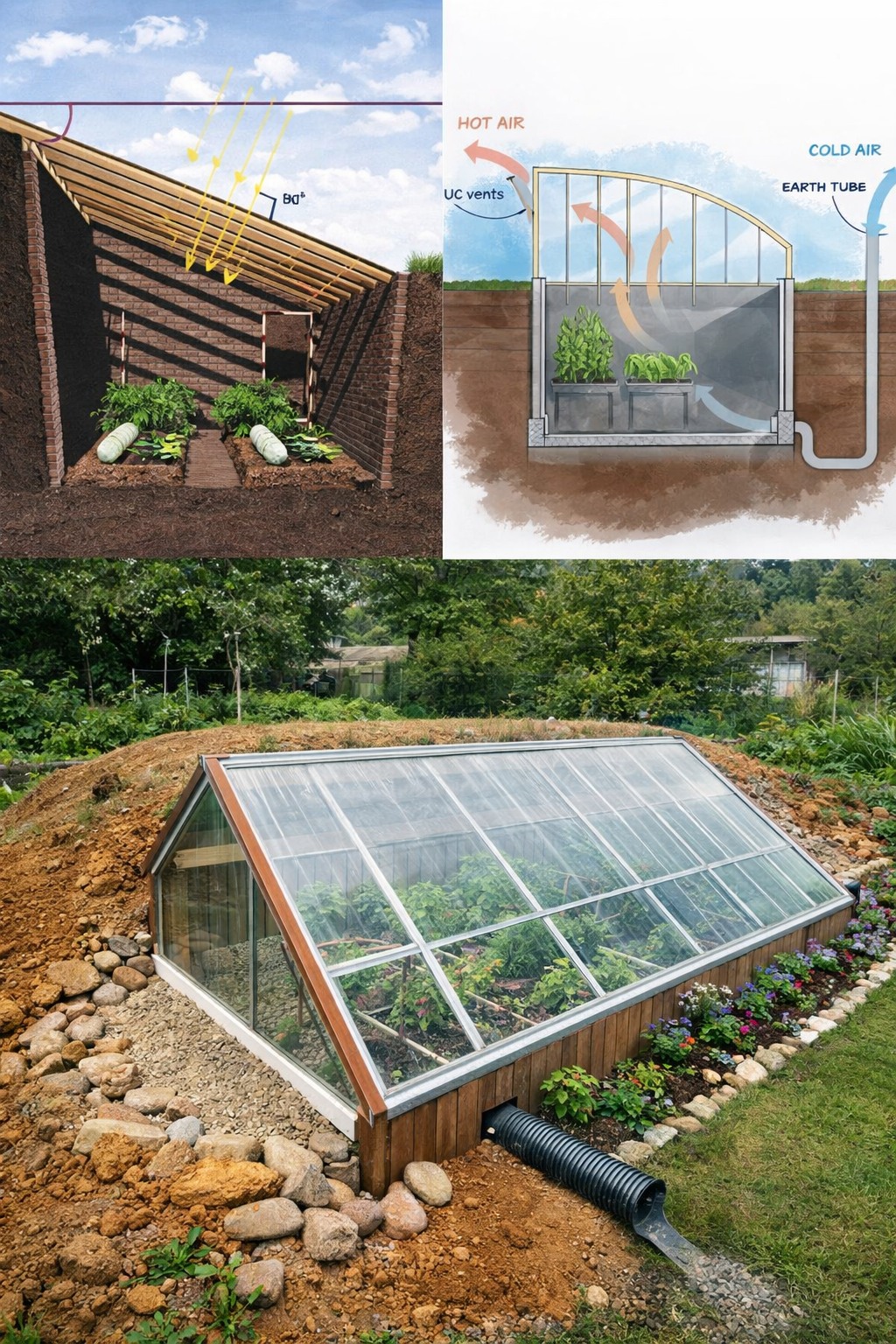
Unlike traditional greenhouses that rely heavily on external heating, underground greenhouses use passive solar energy. Sunlight enters through the slanted transparent roof, warming the interior soil and air during the day. As temperatures drop at night, the surrounding earth slowly releases stored heat, keeping plants safe from frost and extreme cold.
Ventilation plays a crucial role in this design. Warm air naturally rises and escapes through upper vents, while cooler air is drawn in through lower channels.
This continuous airflow helps regulate temperature and humidity without the need for mechanical systems, reducing energy consumption and maintenance costs.
The earth-sheltered walls also provide excellent protection from wind, storms, and temperature fluctuations.
Crops grow in a calm, stable microclimate, which improves yields and extends growing seasons—even in harsh climates.
Vegetables, herbs, and leafy greens thrive in these conditions, making underground greenhouses ideal for self-sufficiency and small-scale farming.
Another major advantage is water efficiency. Reduced exposure to wind and sun minimizes evaporation, while condensation inside the greenhouse can be redirected back into the soil.
Combined with drip irrigation, this creates a highly efficient growing system.
Overall, the underground greenhouse represents a smart fusion of traditional knowledge and modern sustainability.
It proves that food production doesn’t always require complex technology—sometimes, the most effective solutions come from working in harmony with the earth itself.