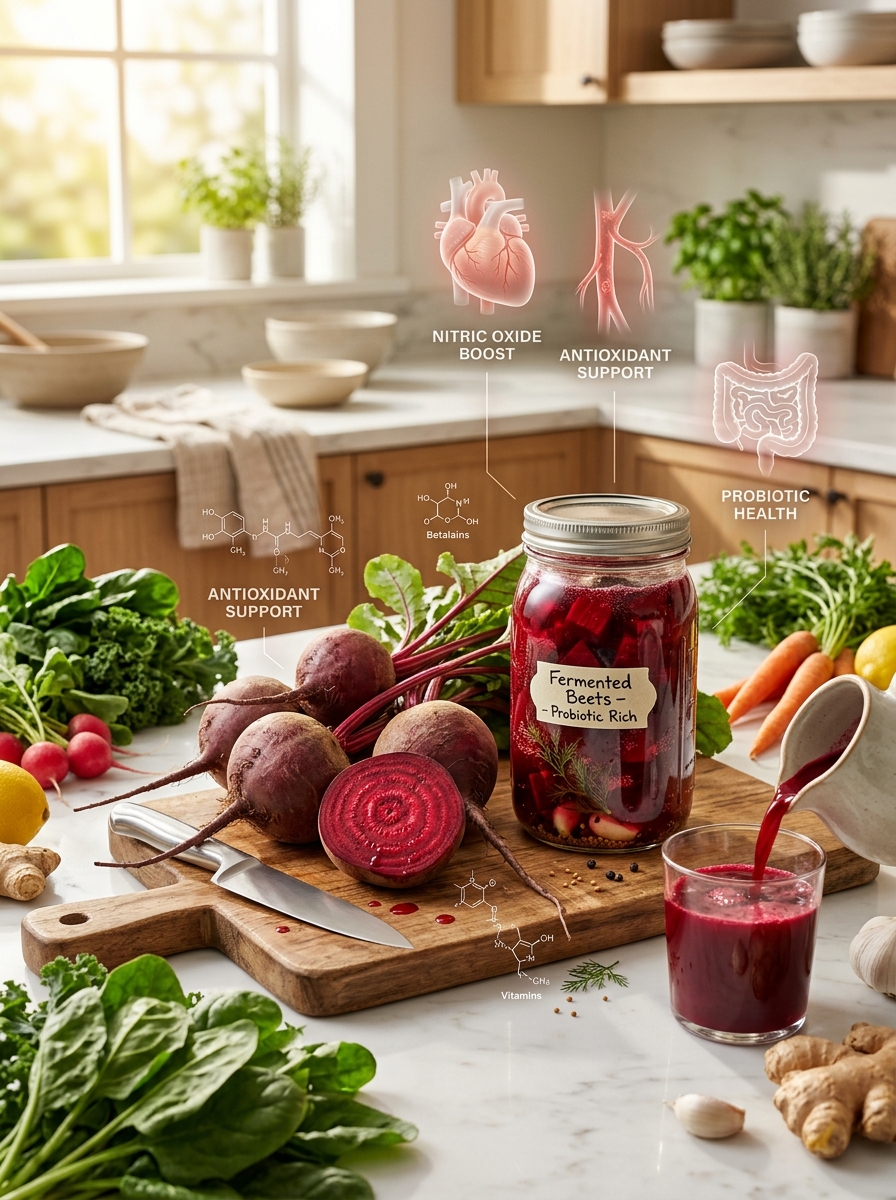
Beets are among the most nutrient-dense vegetables you can add to your diet. Their vibrant red color comes from powerful plant compounds called betalains, which have antioxidant and anti-inflammatory properties. Whether eaten fresh, roasted, juiced, or fermented, beets offer impressive health benefits supported by scientific research. Fermented beets provide an extra advantage by supplying beneficial probiotics that support digestive health.
1. Supports Heart Health
Beets are naturally high in dietary nitrates, which your body converts into nitric oxide. Nitric oxide relaxes and widens blood vessels, improving blood flow and helping lower blood pressure. Numerous clinical studies have shown that drinking beet juice or eating nitrate-rich beets can significantly reduce blood pressure in many adults, especially those with hypertension.
2. Improves Exercise Performance
Athletes often consume beet juice before training because dietary nitrates improve oxygen efficiency. This allows muscles to work harder while using less oxygen, increasing endurance and delaying fatigue during prolonged exercise.
3. Rich in Powerful Antioxidants
Beets contain betalains, vitamin C, manganese, and polyphenols, all of which help protect cells from oxidative stress caused by free radicals. Oxidative damage contributes to aging and many chronic diseases, making antioxidant-rich foods an important part of a healthy diet.
4. Helps Reduce Inflammation
Chronic inflammation has been linked to conditions such as heart disease, arthritis, diabetes, and certain cancers. Betalain pigments found in beets have demonstrated anti-inflammatory effects in laboratory and human studies, potentially helping reduce inflammatory markers over time.
5. Supports Healthy Digestion
Whole beets are an excellent source of dietary fiber. Fiber promotes regular bowel movements, supports healthy gut bacteria, reduces constipation, and may lower the risk of digestive disorders including diverticular disease.
6. Promotes Brain Health
Improved blood flow isn’t only beneficial for the heart. Nitric oxide produced from beet nitrates also increases blood circulation to the brain, particularly areas involved in memory, concentration, and executive function. Some research suggests this may help support cognitive performance in older adults.
7. May Help Control Blood Sugar
Despite their naturally sweet taste, beets have a relatively moderate glycemic load when eaten whole. Their fiber content slows sugar absorption, helping reduce rapid spikes in blood glucose. Certain plant compounds in beets may also improve insulin sensitivity, though more research is needed.
8. Supports Liver Function
Animal and preliminary human research suggests betalains may help protect liver cells from oxidative damage while supporting the body’s natural detoxification processes. Although the liver naturally detoxifies the body without needing special “cleanses,” a nutrient-rich diet that includes vegetables like beets supports overall liver health.
9. Excellent Source of Essential Nutrients
Beets provide many vitamins and minerals, including:
- Folate (Vitamin B9), important for cell growth and DNA formation
- Potassium, which supports healthy blood pressure and muscle function
- Manganese, involved in metabolism and bone health
- Iron, which helps produce healthy red blood cells
- Vitamin C, supporting immune function and collagen production
10. Benefits of Fermented Beets
Fermented beets offer all the nutrients found in fresh beets while adding beneficial probiotic bacteria produced during fermentation.
Potential benefits include:
- Supporting a healthy balance of gut bacteria
- Improving digestion
- Enhancing nutrient absorption
- Supporting immune function through gut health
- Providing natural organic acids that may improve digestive comfort
Keep in mind that the probiotic content depends on how the beets are fermented. Pasteurized commercial products may contain fewer live bacteria than traditionally fermented versions.
Are There Any Precautions?
Beets are safe for most people, but there are a few considerations:
- Beets can temporarily turn urine or stool pink or red (called beeturia), which is harmless.
- They contain oxalates, so people with a history of calcium oxalate kidney stones may need to moderate intake.
- Because beets can lower blood pressure, people taking blood pressure medications should discuss significant dietary changes with their healthcare provider.
- Fermented beets may be high in sodium, depending on how they are prepared.
The Bottom Line
Both fresh and fermented beets are highly nutritious foods backed by scientific research. Regularly including them in a balanced diet may support heart health, healthy blood pressure, exercise performance, digestive health, brain function, and overall wellness. Fermented beets provide the added advantage of beneficial probiotics that can contribute to a healthy gut microbiome. While no single food can prevent or cure disease, beets are a nutritious addition to an overall healthy lifestyle.