Drinking water first thing in the morning has become a popular wellness habit around the world, often associated with Japanese Water Therapy. Supporters claim it can improve digestion, boost metabolism, detoxify the body, aid weight loss, and even prevent chronic diseases. While staying hydrated is undeniably important for overall health, it’s equally important to separate scientifically supported benefits from claims that lack strong evidence.
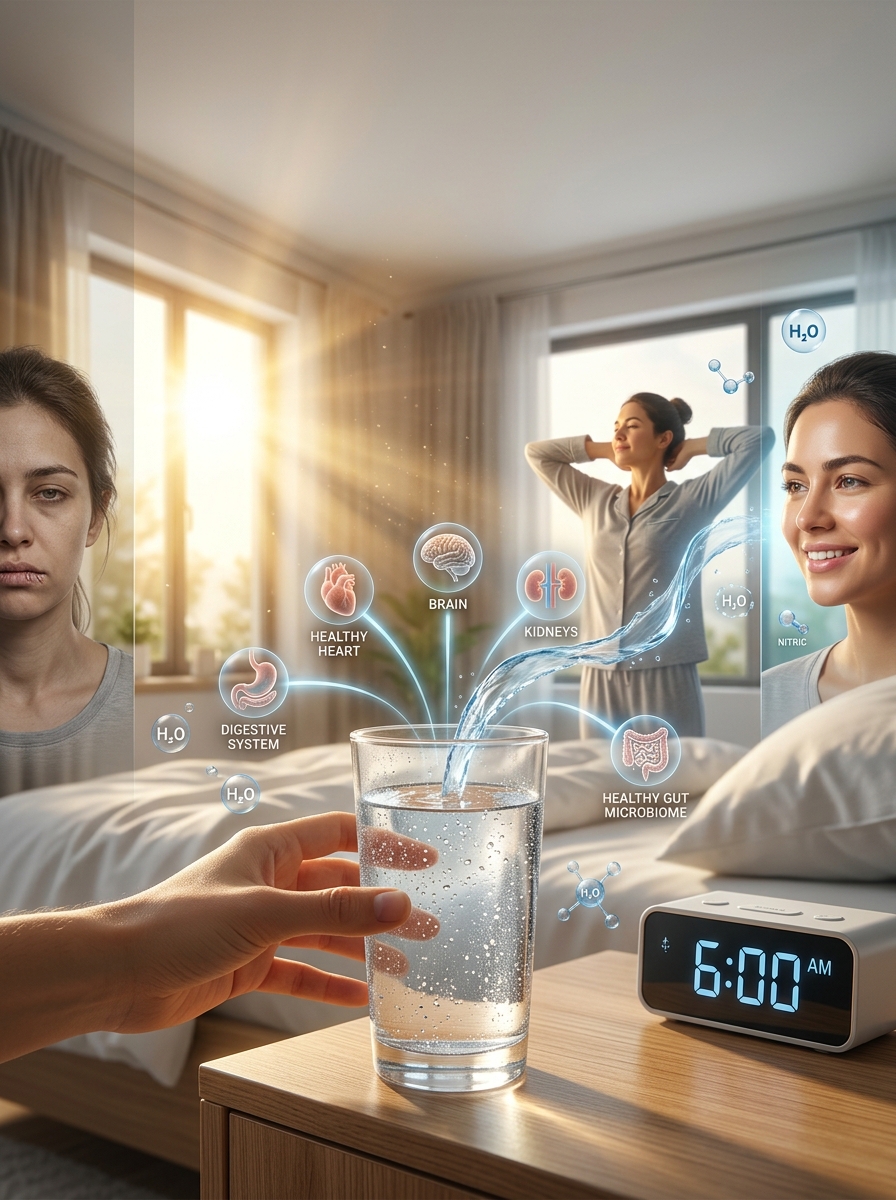
Here’s what Japanese Water Therapy involves and what current science actually says.
What Is Japanese Water Therapy?
Japanese Water Therapy is a morning routine that encourages drinking several glasses of water immediately after waking up, before eating or brushing your teeth. A common version of the practice recommends:
- Drink about 4–5 glasses (approximately 600–800 mL) of room-temperature water immediately after waking.
- Wait 30–45 minutes before eating breakfast.
- Eat meals normally but avoid eating or drinking for about 2 hours after meals.
Advocates claim this routine helps improve overall health, although many of these claims are not supported by high-quality clinical research.
1. Rehydrates the Body After Sleep
One benefit that is well supported by science is rehydration.
During sleep, your body continues to lose water through breathing, perspiration, and normal bodily functions. Drinking water after waking helps replace these fluids and supports normal hydration.
Proper hydration is important for:
- Healthy circulation
- Body temperature regulation
- Joint lubrication
- Nutrient transport
- Kidney function
2. May Improve Mental Alertness
Even mild dehydration can affect mood, concentration, and cognitive performance.
Drinking water in the morning may help people who wake up slightly dehydrated feel more alert and refreshed, although the effect varies between individuals.
3. Supports Healthy Digestion
Water helps move food through the digestive system and softens stool, reducing the risk of constipation.
While drinking water itself doesn’t “cleanse” the digestive tract, adequate hydration supports normal digestive function throughout the day.
4. May Help With Weight Management
Some studies suggest drinking water before meals may help people eat fewer calories by increasing feelings of fullness.
Replacing sugary beverages with water can also reduce overall calorie intake, making water a useful part of a healthy weight-management plan.
However, drinking water alone does not cause significant weight loss without healthy eating and regular physical activity.
5. Supports Kidney Function
The kidneys naturally filter waste products from the blood.
Adequate water intake helps the kidneys produce urine efficiently and may reduce the risk of certain kidney stones in susceptible individuals.
However, drinking excessive amounts of water offers no additional “detox” benefit beyond meeting your body’s hydration needs.
6. Does It “Detox” the Body?
One of the most common claims surrounding Japanese Water Therapy is that it detoxifies the body.
Scientifically, your body already has highly effective detoxification systems.
The:
- Liver
- Kidneys
- Lungs
- Digestive system
continuously remove waste products and toxins.
Drinking enough water supports these organs, but water itself does not flush toxins in the way many detox programs claim.
7. Does It Boost Metabolism?
Some research suggests drinking water may temporarily increase energy expenditure slightly, particularly after consuming cold water.
However, the increase is relatively small and should not be considered a major weight-loss strategy.
8. Does It Cure Diseases?
Online articles often claim Japanese Water Therapy can cure conditions such as:
- Diabetes
- High blood pressure
- Cancer
- Arthritis
- Asthma
- Heart disease
There is no reliable scientific evidence that drinking water on an empty stomach can cure or prevent these diseases.
Proper hydration is important for overall health, but it is not a substitute for medical treatment.
Room Temperature vs. Cold Water
Many versions of Japanese Water Therapy recommend room-temperature water.
From a scientific standpoint, both cold and room-temperature water effectively hydrate the body.
The best choice is simply the temperature you find most comfortable.
How Much Water Do You Really Need?
Water needs vary depending on:
- Age
- Body size
- Physical activity
- Climate
- Health conditions
- Pregnancy or breastfeeding
Rather than following a one-size-fits-all rule, aim to drink enough fluids throughout the day so that you remain well hydrated. Pale yellow urine is often a practical sign of adequate hydration for many healthy adults.
Is Drinking Too Much Water Dangerous?
Yes.
Although uncommon, drinking excessive amounts of water in a short period can cause hyponatremia, a condition where blood sodium levels become dangerously diluted.
This is more likely during endurance sports or water-drinking contests than during normal daily hydration.
Listen to your body’s thirst and avoid forcing large amounts of water if you feel uncomfortable.
Practical Tips for Healthy Morning Hydration
A simple morning hydration routine can include:
- Drink one or two glasses of water after waking if you’re thirsty.
- Eat a balanced breakfast rich in protein, fiber, and healthy fats.
- Continue drinking water regularly throughout the day.
- Increase fluid intake during hot weather or physical activity.
- Choose water over sugar-sweetened beverages whenever possible.
The Bottom Line
Drinking water on an empty stomach is a healthy habit for many people because it helps rehydrate the body after sleep, supports digestion, kidney function, and overall hydration. However, many of the dramatic claims surrounding Japanese Water Therapy—such as curing chronic diseases, dramatically boosting metabolism, or detoxifying the body—are not supported by strong scientific evidence.
The healthiest approach is to view morning water as one part of a balanced lifestyle that also includes nutritious eating, regular physical activity, sufficient sleep, and appropriate medical care when needed.