For nine years, my apartment in Baltimore was more than just a place where I slept. It was the one place in my life where I felt completely settled. The walls held memories, the neighborhood felt familiar, and the people around me had become like a second family.
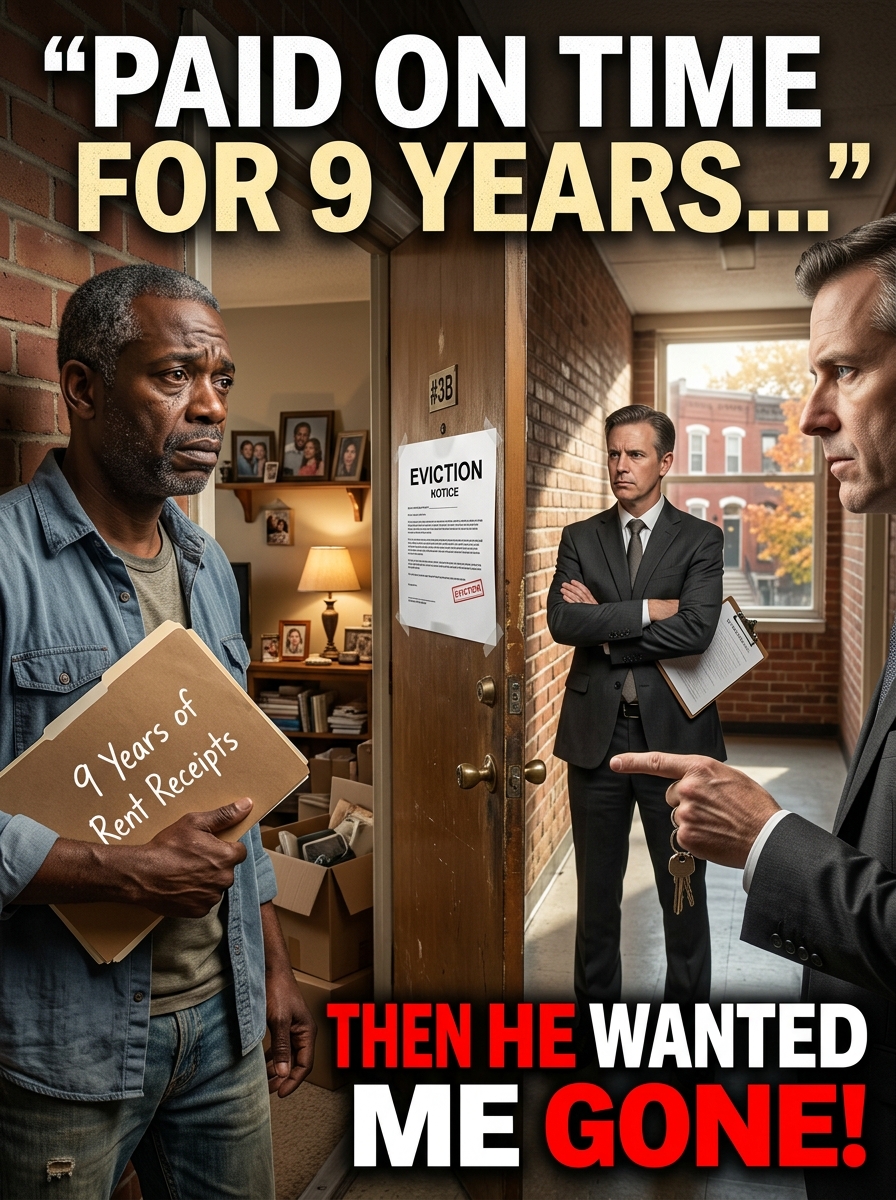
I moved into the apartment when I was looking for stability. I wasn’t searching for luxury. I wanted something simple—a safe place where I could come home after work, relax, and build my life.
From the very first month, I made one promise to myself: I would always be a responsible tenant.
And I kept that promise.
Every month, I paid my rent on time. Not one late payment. Not one excuse. Not one missed month.
Nine years passed, and my landlord never had a reason to complain about me.
I kept the apartment clean. I fixed small problems myself whenever I could. I respected my neighbors and followed every rule. When maintenance issues happened, I reported them politely and worked with the landlord to solve them.
I wasn’t just renting an apartment—I was taking care of a home.
My original landlord knew me well. Over the years, we built a relationship based on trust. He knew I was reliable, and I knew he valued having a tenant who caused no problems.
Sometimes, when life feels stable, you start believing it will stay that way forever.
But then, everything changed.
One afternoon, I received a notice that the building had been sold.
A new landlord had purchased the property.
At first, I wasn’t worried. I thought, “This is normal. New owners come in all the time. As long as I continue paying rent and following the lease, everything should be fine.”
I had nine years of proof that I was a good tenant.
I thought that would matter.
A few weeks later, I met the new landlord for the first time.
He walked through the building with a different attitude. He wasn’t interested in learning about the tenants or the history of the property. He seemed focused only on what changes he could make.
When he finally spoke with me, I introduced myself and explained that I had lived there for almost a decade.
“I’ve been here nine years,” I told him. “My rent has always been paid on time.”
I expected him to appreciate that.
Instead, he simply looked at me and said, “Yes, I saw your records.”
There was no thank you. No acknowledgment. No sense that my loyalty meant anything.
A few days later, I received another message from him asking to meet.
I remember sitting there wondering what it could be about. I thought maybe he wanted to discuss repairs or improvements.
I never expected what he was about to say.
He told me he had different plans for the apartment.
He wanted me to leave.
I was completely shocked.
I looked at him and asked, “Why?”
I wasn’t behind on rent. I wasn’t causing problems. I wasn’t breaking any rules.
For nine years, I had done everything a landlord could ask from a tenant.
His answer was simple.
“The property belongs to me now, and I want to make changes.”
Those words hit me harder than I expected.
Because suddenly, nine years of being responsible felt invisible.
I went home that night and looked around my apartment differently. The small kitchen where I cooked meals. The window where I watched Baltimore mornings begin. The corner where I kept old photographs and memories.
This wasn’t just a rental unit to me.
This was my life.
I felt angry, but more than anything, I felt uncertain.
Moving is not as simple as people make it sound. Finding another apartment in Baltimore meant dealing with rising prices, application fees, deposits, and the emotional weight of leaving a place where you had spent nearly a decade.
I started asking myself questions.
“Did all those years of paying on time mean nothing?”
“Does being a good tenant give you any security?”
“Could someone simply come in and decide your life needs to change?”
Instead of reacting emotionally, I decided to educate myself.
I gathered every rent receipt, every message, and every document connected to my tenancy. I wanted to understand exactly where I stood and what options I had.
I also talked with neighbors who had lived in the building for years. Many of them were facing similar uncertainty. They understood what I was feeling—the fear of losing a place that had become home.
Their support reminded me that I wasn’t just fighting for an apartment.
I was standing up for the idea that people deserve respect.
I learned an important lesson during that difficult time: being a responsible person does not always prevent unexpected challenges. But preparation, knowledge, and confidence can help you face them.
I continued communicating professionally with the landlord. I stayed calm. I kept records. I refused to let frustration control my decisions.
Eventually, I realized something important.
A home is not only defined by ownership papers.
A home is built through years of memories, care, and connection.
For nine years, I proved what kind of tenant I was. I paid my rent. I respected the property. I treated the apartment like it mattered.
When a new landlord came in and wanted me gone, I discovered that sometimes you have to fight not because you did something wrong—but because you believe your years of effort deserve to be recognized.
That apartment in Baltimore taught me a lesson I will never forget:
Always keep your records. Always know your rights. And never underestimate the value of standing up for yourself when something important is at stake.