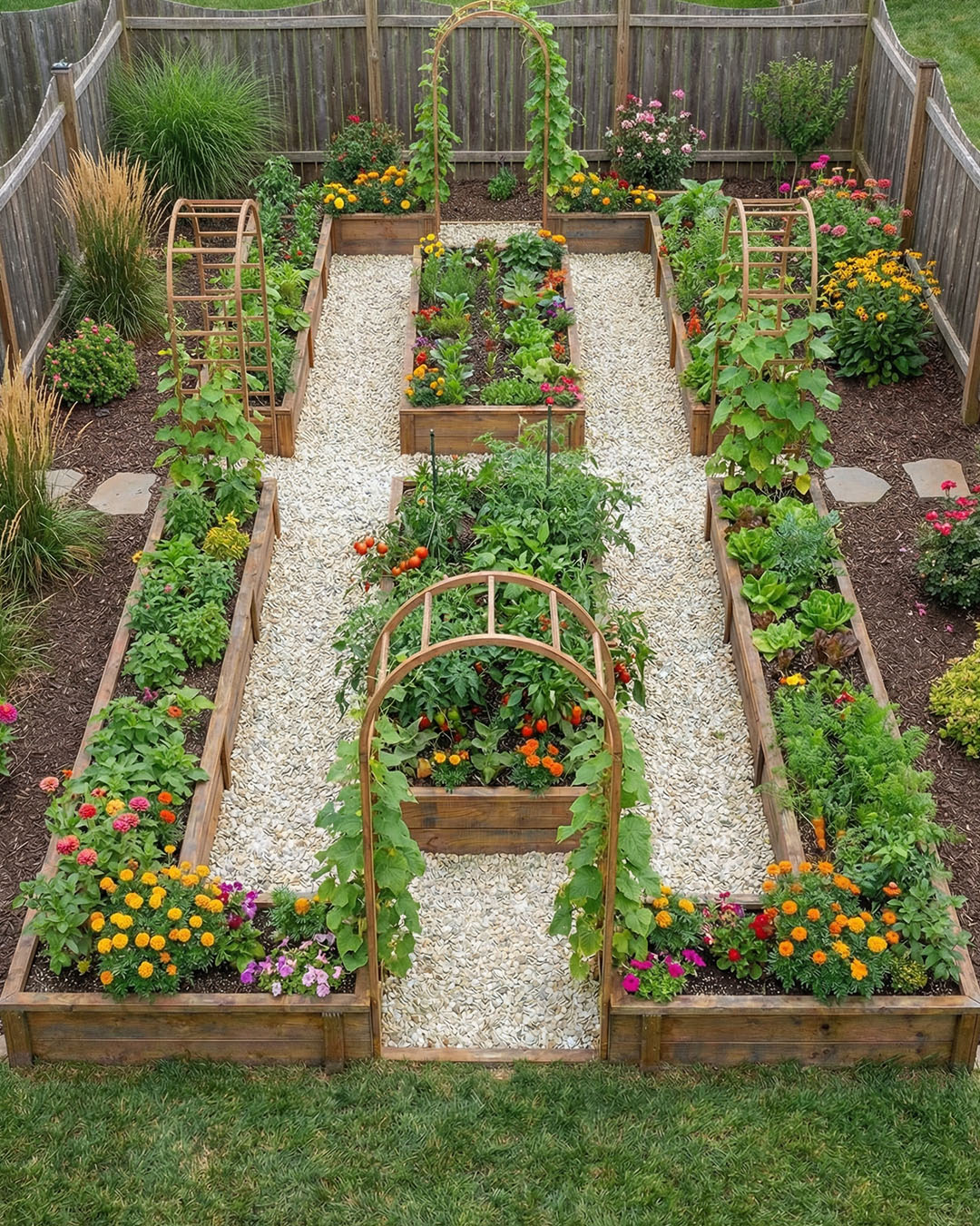
This type of raised bed layout is designed to get the most growing space out of a compact footprint while keeping everything easy to reach, easy to maintain, and pleasant to walk through. It works just as well for vegetables, flowers, or a mix of both.
Why this layout works so well Beds are arranged in parallel rows with clear paths between them, which eliminates wasted space and keeps plants accessible from both sides. You never have to step into the soil, so compaction is reduced and roots stay healthier. The symmetry also makes the garden feel organized and intentional rather than crowded.
Pathways that stay clean and usable Gravel or crushed stone paths provide excellent drainage and stay walkable even after rain. Defined paths keep mud out of the beds and make harvesting and maintenance more enjoyable. Edging along the paths keeps materials contained and simplifies mowing around the garden.
Vertical growing increases yields Adding arches and trellises allows climbing plants to grow upward instead of spreading out. This increases production without taking up extra ground space. Vertical elements also improve airflow, reduce disease pressure, and add visual interest to the garden.
Easy access to every plant Each bed is narrow enough to reach the center from either side. This makes planting, pruning, and harvesting faster and less physically demanding. It also helps keep the garden looking tidy throughout the season.
Raised bed material options Wood is one of the most popular choices and works well when using rot resistant species or treated lumber rated for ground contact. Cedar and similar woods age nicely and are easy to work with. Composite boards offer long life with minimal maintenance and a clean appearance. Metal beds provide durability and a modern look while warming soil earlier in the season. Stone or block beds are more permanent and work well when the layout will not change.
Soil quality and drainage benefits Raised beds allow you to control soil quality from the start. Well draining soil warms faster in spring and supports strong root growth. This leads to healthier plants and more consistent harvests over time.
How to adapt this layout to your space This design can be scaled up or down depending on yard size. Fewer beds still benefit from the same principles of access, paths, and vertical growing. Even a small version improves efficiency compared to scattered or oversized beds.
Why gardeners love this setup This layout balances productivity and appearance. It keeps the garden organized, reduces maintenance headaches, and creates a space that feels enjoyable to spend time in. When everything has a clear place and purpose, gardening becomes simpler and more rewarding season after season.