Adding a water feature to your garden introduces a new layer of tranquility, reflecting light and providing a soothing sound. However, traditional in-ground ponds can be expensive and labor-intensive to build. Enter the stock tank pond, a simple, stylish, and completely no-dig solution that you can set up in a single weekend. These galvanized metal troughs, originally designed for livestock, make for durable and attractive above-ground ponds that fit almost any yard size.
Planning and Location The first step is selecting the right spot. If you want to grow flowering aquatic plants like water lilies, you need a location that receives at least six hours of direct sunlight a day. Once you have the spot, site preparation is the most critical part of the project. You must create a perfectly level base. If the tank is not level, the water line will look crooked, which ruins the aesthetic. Clear the grass and lay down a pad of crushed stone, sand, or pavers to ensure a flat foundation.
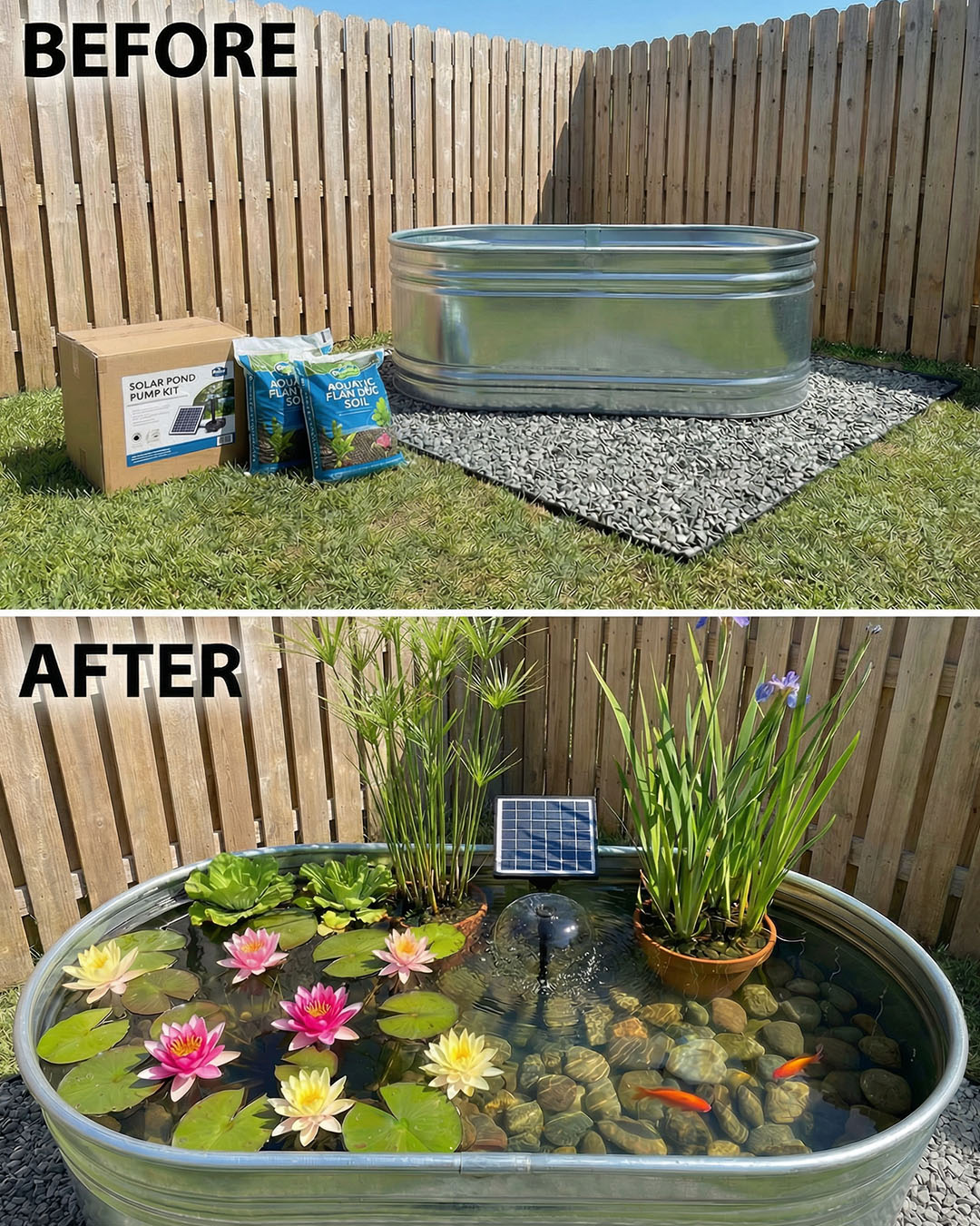
Gathering Your Materials You do not need a lot of complex equipment for this build. Start with a galvanized stock tank, which you can find at most farm supply stores in sizes ranging from two to eight feet. For circulation, a solar-powered pond pump kit is an excellent choice because it requires no outdoor electrical outlets and runs for free. You will also need bags of washed river rocks to cover the bottom and a variety of aquatic plants to keep the water clean.
Setting Up the Tank Before filling it, wipe down the inside of the tank with a vinegar-water solution to remove any manufacturing residues, then rinse it thoroughly. Place the empty tank on your leveled pad. Position your solar pump in the center and arrange the river rocks across the bottom. This helps hide the pump cord and gives the pond a natural look. You can also stack larger rocks to create underwater shelves for your plants to sit on.
Planting Your Pond A healthy pond relies on a mix of plants to filter the water and provide shade. You will need deep-water plants like water lilies that sit at the bottom, and marginal plants like iris or papyrus that prefer shallow water. Use overturned terracotta pots or bricks to elevate the marginal plants so their leaves are above the surface. Aim to eventually cover about sixty percent of the water surface with vegetation. This provides shade that keeps the water cool and limits algae growth.
Filling and Stocking Gently fill the tank with a garden hose. If you plan to add fish, use a water conditioner to remove chlorine and chloramines from the tap water. Goldfish or minnows are great additions because they help control mosquitoes, but wait at least a week after filling the pond before introducing them. This gives the water temperature time to stabilize and allows beneficial bacteria to begin growing.
Maintenance and Winter Care One of the best parts of a stock tank pond is the low maintenance. You may see an algae bloom at first, but be patient. As your plants grow and consume nutrients, the water should clear up naturally. In colder climates, you have a few options for winter. You can drain the tank, move hardy plants and fish indoors, or use a floating de-icer to keep a hole open in the ice. While galvanized tanks are tough, preventing the water from freezing into a solid block will help prolong the life of the metal seams.