If you want to grow heat-loving crops like tomatoes well past the first frost, you don’t need a massive budget or a commercial hoop house. You can build a highly effective “lean-to” greenhouse using recycled materials that is as beautiful as it is functional. This specific design capitalizes on an existing stone or brick wall to create a heat-trapping microclimate, allowing you to harvest weeks earlier in the spring and later in the autumn.
The Thermal Mass Advantage The most critical part of this build isn’t the glass; it is the wall behind it. By attaching the structure to a south-facing stone or brick wall, you create a “thermal battery.” The masonry absorbs the sun’s heat all day long and slowly radiates it back into the greenhouse at night. This passive solar heating keeps the interior significantly warmer than the outside air, preventing frost damage without using a single watt of electricity.
Constructing the Stone “Knee Wall” Base Never set wooden window frames directly on the ground, or they will rot within a few seasons. You must build a raised masonry foundation, known as a knee wall or plinth. As shown here, using reclaimed stone or brick creates a sturdy, rot-proof base that matches the aesthetic of the existing wall. This elevation not only protects the vintage timber frames from ground moisture but also adds vertical height, giving tall plants like indeterminate tomatoes the headroom they need to thrive.
Sourcing and Prepping the Frames The skeleton of this greenhouse is made from salvaged wooden window frames. Look for vintage sashes with divided “lites” (panes) at architectural salvage yards, as the old-growth wood is far more durable than modern pine. Before installation, scrape and sand the frames to remove loose paint, then seal them with a high-quality exterior grade paint—the sage green used here blends perfectly with garden foliage. Ensure at least one panel is hinged to open, providing essential ventilation to prevent overheating in mid-summer.
Assembling the Lean-To Structure The structural integrity comes from anchoring the frame to the house or garden wall. Bolt a horizontal timber ledger board to the masonry wall; this acts as the spine that supports the roof rafters. The window frames serve as the vertical walls, resting securely on your stone plinth. Angle the roof steeply away from the wall to shed rain and snow immediately. Using polycarbonate sheets or tempered glass for the roof is safer and lighter than trying to balance heavy vintage windows overhead.
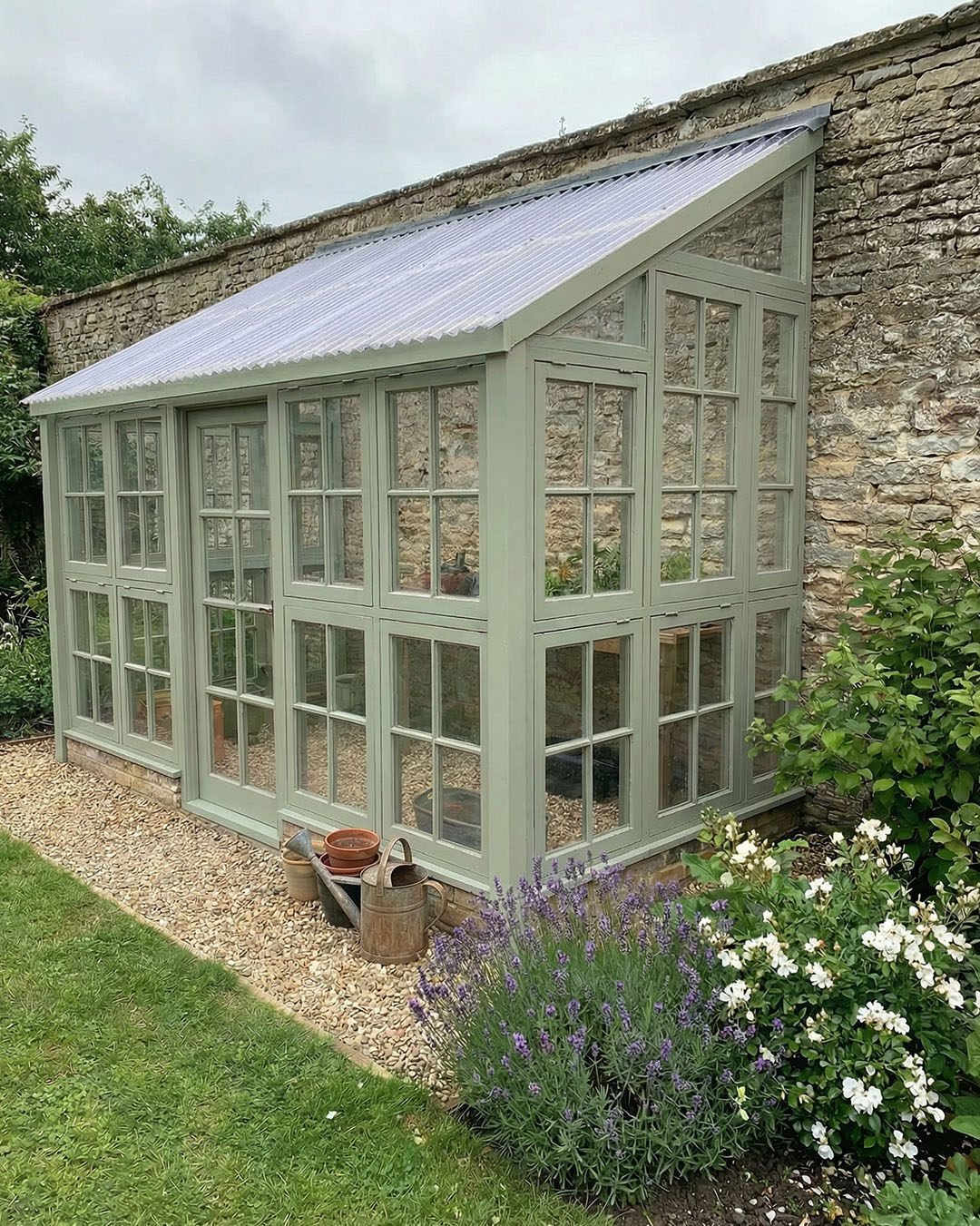
Strategic Planting Inside and Out Because this space captures intense heat, use it for crops that demand tropical conditions. Plant tomatoes, peppers, or basil directly in the ground inside the frame. The protection from rain also prevents fungal diseases like blight. To integrate the structure into the landscape, plant drought-tolerant perennials like lavender along the exterior base. The lavender loves the reflected heat bouncing off the glass and softens the transition between the hardscaping and the lawn.