This project transforms a quiet corner of the yard into a peaceful water feature that feels intentional and well integrated. By using a rigid kid’s pool as the pond shell and natural stone for structure, you can create a compact pond and waterfall that is attractive, durable, and easy to maintain.
Planning the location and layout A corner of the yard where two fences meet is ideal for this type of build. The fencing naturally frames the pond, provides a backdrop for the waterfall, and helps conceal plumbing and electrical. Before digging, make sure the area drains well and is not prone to standing water after rain. Decide on the waterfall height early, since that determines pump selection and stone placement. A height in the 18 to 30 inch range gives good sound and movement without excessive splash.
Choosing the right kid’s pool The pool acts as the pond shell, so it needs to be sturdy and visually simple. A rigid plastic pool with thick walls and a flat bottom works best. Solid blue or another solid color is ideal, since patterns and graphics remain visible even when most of the rim is covered with stone. Pools around 4 to 6 feet in diameter tend to look balanced once landscaping is added.
Setting the pool correctly Dig just deep enough so the pool rim sits about one to two inches above the surrounding soil. This small elevation prevents dirt and mulch from washing into the pond during heavy rain. Take time to level the pool carefully in multiple directions and pack the soil firmly underneath before filling it with water.
Building the waterfall mound The mound behind the pond supports the stone and the waterfall feature, so stability matters. Use the soil from the excavation and build the mound in compacted layers rather than loose piles. Shape it with a broad base and a gentle slope so it looks natural and does not settle unevenly over time.
Using an external pump for simplicity An external pump keeps the pond interior clean and avoids the need to hide equipment inside shallow water. Place the pump just outside the pond, slightly below water level, and connect it to the pool with a short intake line that passes through the side or over the rim and is hidden by stone. A screened intake or inline pre filter helps keep debris out of the pump.
This approach simplifies maintenance, makes winter removal easier, and keeps all visible equipment out of the pond. Plumbing the waterfall Flexible pond tubing is the easiest and most forgiving option. Run the tubing from the pump up the back of the mound where it can be concealed by stone and soil. Using tubing larger than the minimum recommended size improves flow and reduces strain on the pump. Keep the run as short and direct as possible for consistent water movement.
Creating the waterfall source At the top of the mound, set a small basin or lined pocket that receives water from the pump and directs it forward. A flat stone lip or spill edge controls where the water exits and creates a clean waterfall into the pond below. Keeping this area level ensures even flow and reduces splashing.
Stacking stone for function and appearance Start with the largest stones at the base and work upward, overlapping joints for stability. Slightly angle stones inward so they lock together. Test the water flow often while stacking and adjust stones until the water falls toward the center of the pond rather than splashing outward.
Concealing the pool rim Flat stones should overlap the pool rim by at least an inch to hide the plastic edge completely. Consistent spacing and a natural stone pattern help the pond feel grounded and permanent. If needed, add a second outer ring of stone to give the edge more thickness and visual weight.
Electrical considerations Water and electricity require careful planning. For a finished feature like this, a permanent outdoor GFCI outlet near the pond is recommended. Wiring should be burial rated or run through conduit, with all connections protected from moisture. This is the point in the project where hiring a licensed electrician makes sense, especially if a new outlet needs to be installed.
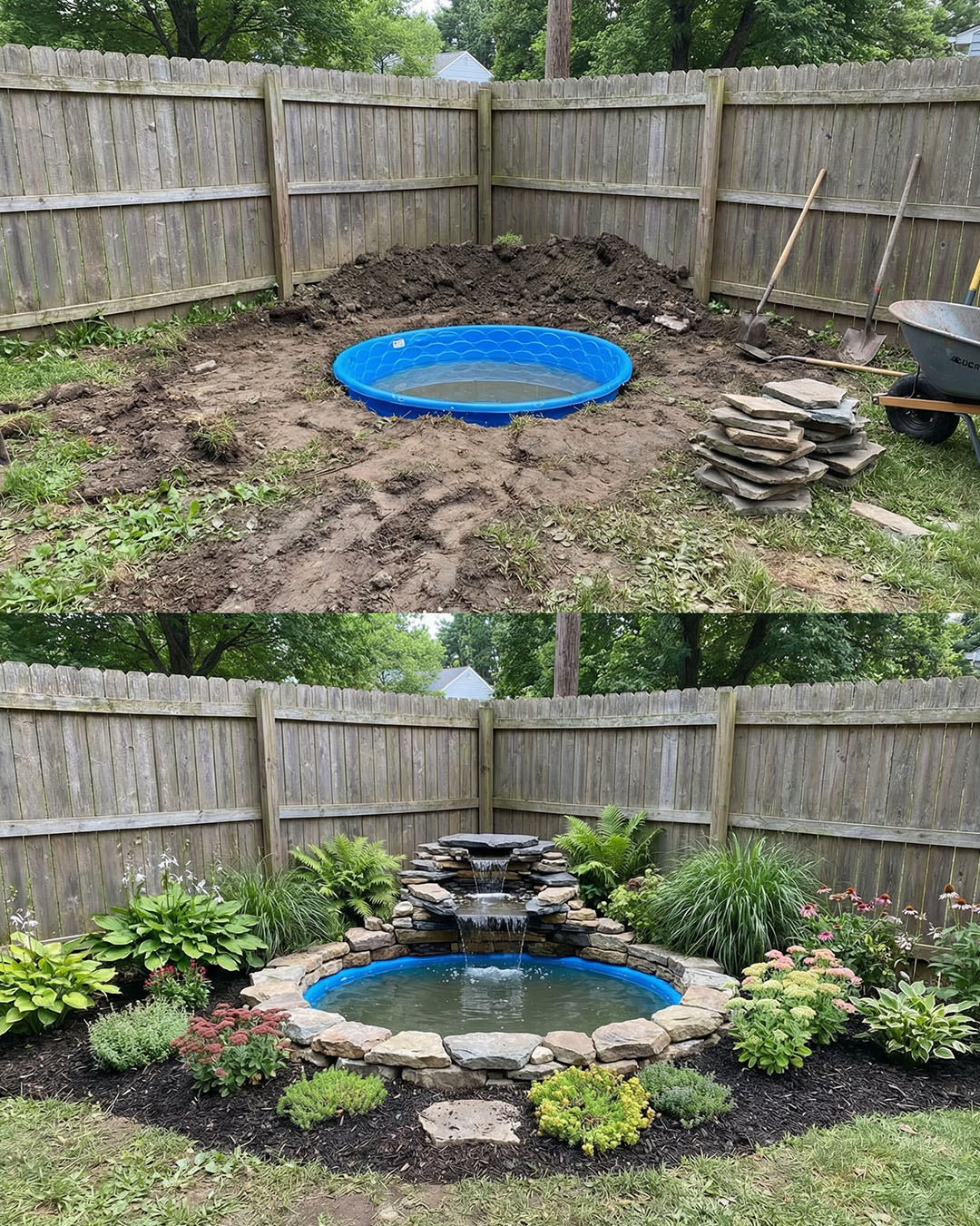
Landscaping to finish the space Landscaping softens the stone and blends the pond into the yard. Ferns, hosts, ornamental grasses, and other shade tolerant plants work well around water features. Keep plants slightly back from stone edges so leaves and debris are easy to remove and water stays clean.
Long term care Maintenance is simple and minimal. Top off water during hot weather, clean the pump intake or pre filter as needed, and remove leaves before they sink. In colder climates, disconnect and store the pump before freezing weather and lower the water level slightly to protect the pool.
With thoughtful placement, simple plumbing, and natural stone, this approach creates a small pond and waterfall that looks intentional, runs smoothly, and becomes a relaxing feature in the yard.