Replacing large areas of lawn with raised beds, paths, and layered plantings reduces maintenance over time. Defined garden beds keep soil healthier and prevent compaction, while clear walkways make the space usable and easy to access. When everything has a place, the garden becomes simpler to manage instead of overwhelming.
Blending vegetables, herbs, flowers, and small fruit trees makes better use of limited space. Flowers support pollinators and beneficial insects, which helps improve yields in nearby food plants. Perennials and shrubs add structure so the garden looks intentional year-round, not just during peak growing season.
Thoughtful front-yard gardens can also improve curb appeal when done neatly and with clear borders. While it may not appeal to every buyer, well-designed landscaping is widely associated with positive first impressions and can make a home stand out. Clean edges, consistent materials, and healthy plants matter more than how much is planted.
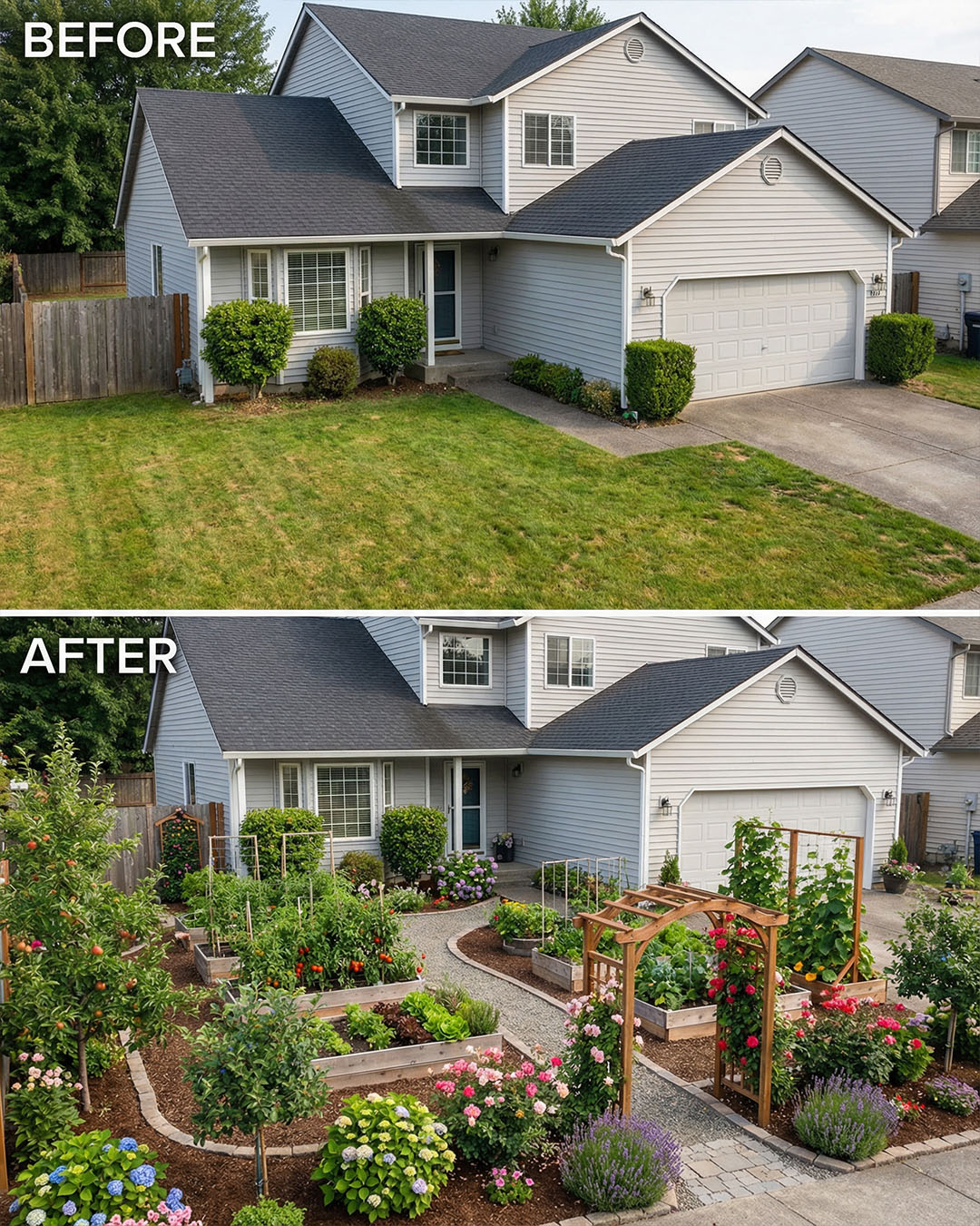
For planning, start small and build in stages. Begin with one or two beds near existing walkways, then expand as you learn how the space behaves. Pay attention to sun exposure, drainage, and how you move through the yard. Prioritize paths first, then fill in beds. This keeps the space practical and avoids crowding later.
A front yard doesn’t have to be decorative only. With careful design, it can be productive, welcoming, and easier to care for than a lawn.