Most of us have that one tree in the yard where the grass looks messy, or worse, we keep hitting the exposed roots with the lawnmower. This not only looks bad, but accidental strikes from string trimmers can damage the bark and harm the tree. Creating a defined tree ring is one of the fastest ways to boost your curb appeal and protect your tree, but you have to do it correctly to avoid killing the roots.
The Golden Rule: Do Not Dig The biggest mistake homeowners make is grabbing a shovel and digging a deep trench around the tree to set a border. A mature tree has critical feeder roots right below the soil surface. cutting through these can starve the tree or make it unstable. Instead of digging down, you want to build up. This method is often called the sheet mulching technique, and it is completely safe for the tree.
Preparing the Base Start by mowing or weed-whacking the grass around the base of the tree as short as possible. You do not need to pull the sod out, which saves you hours of backbreaking labor. Once the grass is short, clear away any debris or fallen sticks. If you have exposed roots, do not try to bury them deeply with soil; simply plan your ring large enough to encompass them.
Using Cardboard as a Weed Barrier Instead of using plastic landscape fabric, which can suffocate the soil and eventually gets tangled in the roots, use plain brown cardboard. Remove any shipping tape or labels from your old boxes and lay the cardboard flat over the short grass around the tree. Overlap the edges so weeds cannot sneak through. Water the cardboard thoroughly until it is soaked. This layer will smother the grass below and eventually decompose, feeding the soil.
Setting the Border Place your border material directly on top of the outer edge of the cardboard. Recycled bricks, cobblestones, or flat pavers work beautifully for this. Since you are not digging a trench, simply nestle the bricks into the ground to ensure they are level. The weight of the border will hold the cardboard in place. This hard edge gives you a clean line to mow against later.
The “Donut” Mulching Technique This is the most critical step for tree health. Spread a two-to-three-inch layer of hardwood mulch over the cardboard. However, you must avoid “volcano mulching,” where the mulch is piled high against the trunk. Mulch touching the bark causes rot and invites pests. Instead, shape the mulch like a donut. Leave a clear gap of two or three inches between the mulch and the actual tree trunk so the root flare remains exposed and dry.
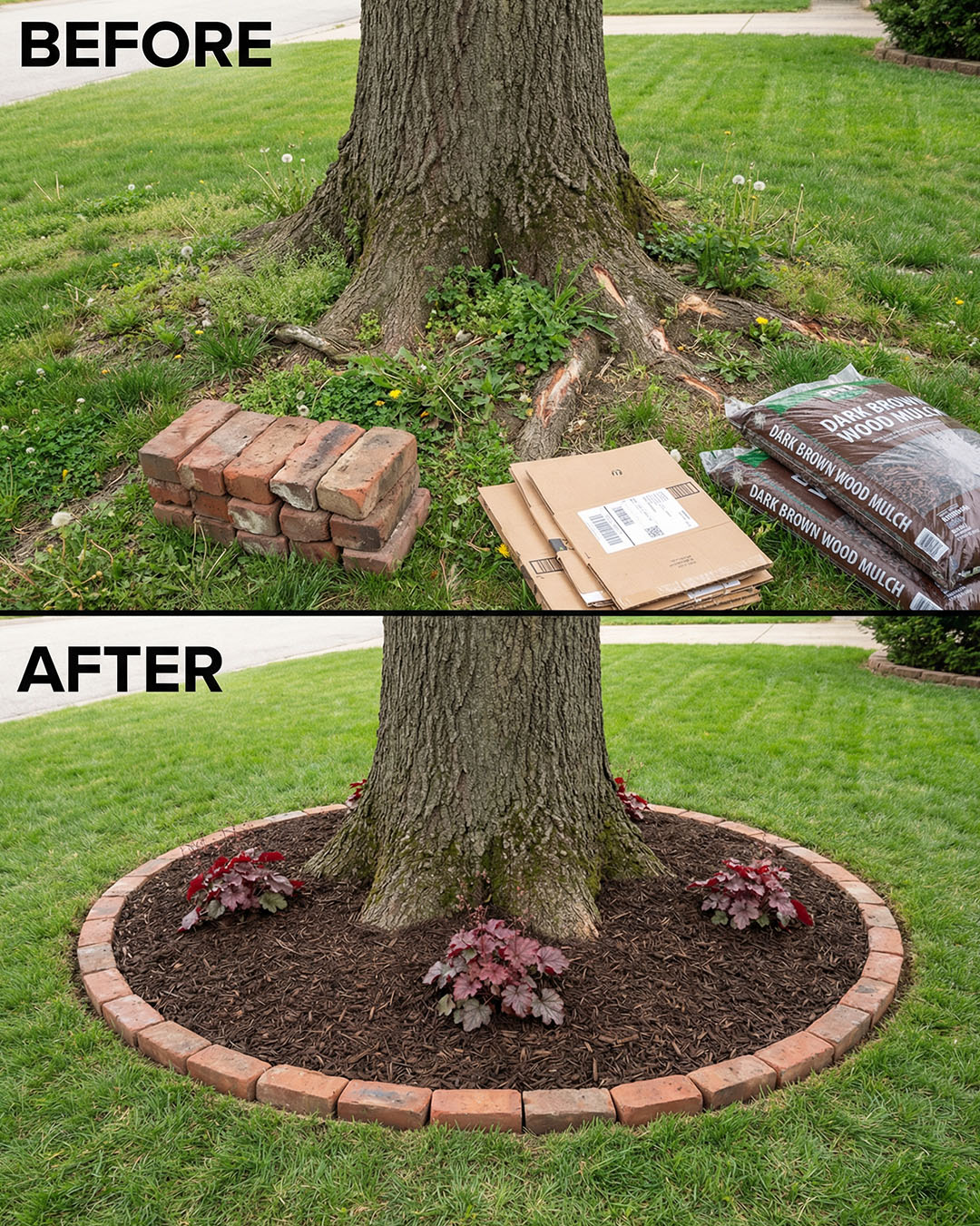
Adding Plants If you want to add a pop of color, choose small, shade-loving perennials with shallow root systems. Plants like Coral Bells or Hosts are perfect for this environment. Since you cannot dig deep holes into the tree roots, you will likely need to plant them slightly higher than ground level and mound the new soil and mulch around their base. This protects the tree while giving you a lush, finished look.