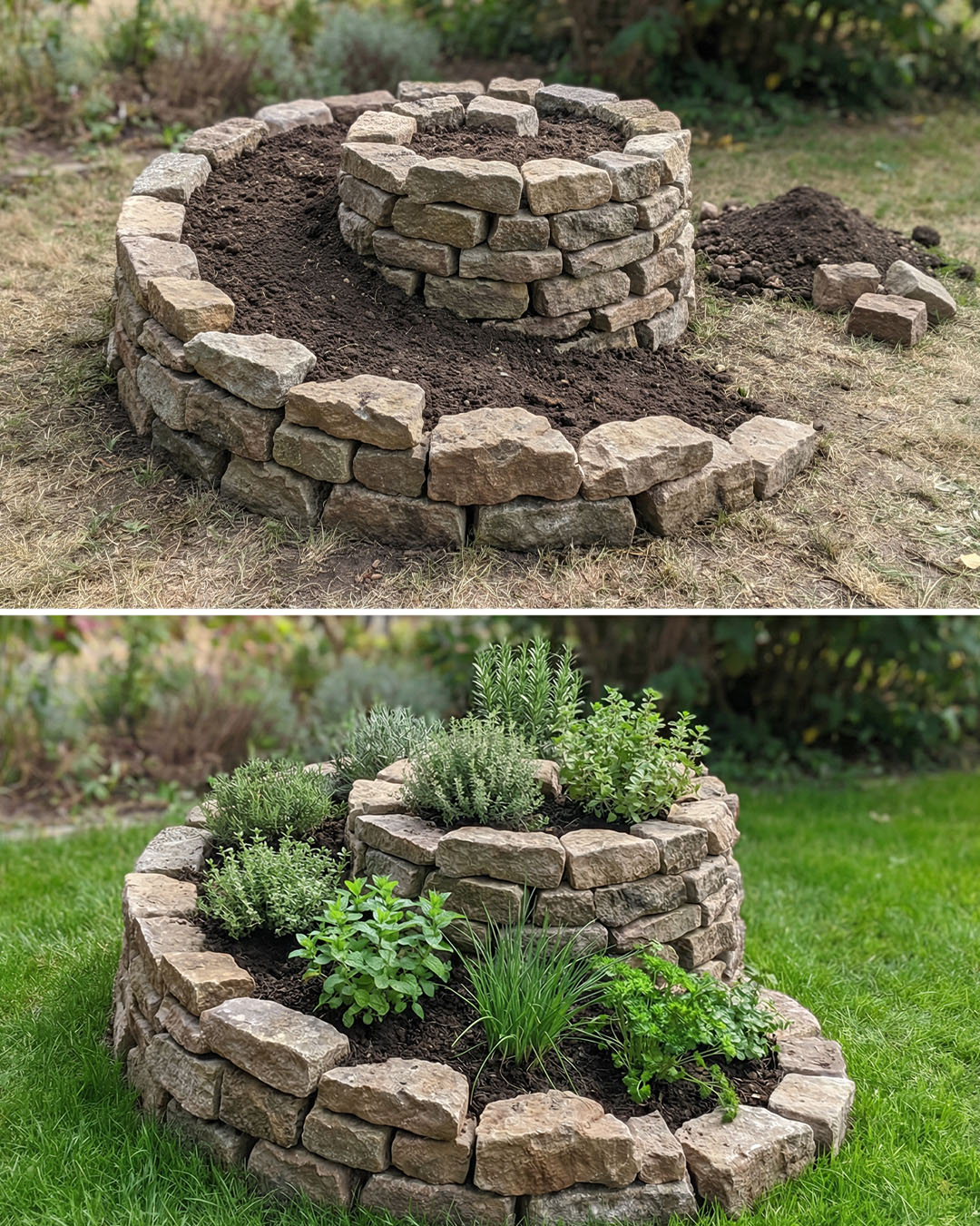
An herb spiral is a smart way to turn a small patch of ground into a highly productive growing area. By stacking stone into a raised spiral, you create multiple growing zones in one compact bed, each with slightly different moisture and sun conditions. That means you can grow a wider variety of herbs in the same footprint while keeping everything easy to reach.
What an Herb Spiral Does Differently
The spiral shape naturally creates height. The top stays warmer and drains faster, while the lower sections hold more moisture. This lets you match herbs to the conditions they prefer instead of forcing everything to grow the same way.
It also brings herbs closer together, making harvesting simple and keeping the bed visually interesting all season.
How to Build One
Start by laying out a spiral shape on bare ground. Build the wall using natural stone, stacking from the outside inward and gradually increasing the height toward the center. Take your time fitting stones so the wall feels solid without mortar.
As you build, fill the spiral with soil, firming it gently so it doesn’t settle later. The goal is a stable structure that holds its shape through rain and weather.
Planting Tips
Place drought-tolerant herbs like rosemary, thyme, and oregano near the top. Mid-level areas work well for sage, parsley, and cilantro. The lowest sections are perfect for moisture-loving herbs like basil and chives.
Spacing matters. Give each plant room to grow so airflow stays good and harvesting stays easy.
Why It’s Worth Building
Herb spirals are efficient, low-maintenance, and attractive. They warm up earlier in spring, drain well, and reduce the need for constant watering. On top of that, they add structure and interest to the garden even when herbs aren’t in full growth.
If you want a practical garden feature that looks good and produces steadily, an herb spiral is hard to beat.