This enclosed raised-bed garden is designed for both productivity and protection. By combining multiple raised beds with a full perimeter fence, it creates a dedicated growing space where plants can thrive without constant pressure from wildlife. The layout keeps everything organized, easy to reach, and simple to maintain.
Wide gravel paths make it easy to move between beds, while the raised walls keep soil contained and well-drained. The fencing allows light and airflow while forming a reliable barrier against browsing animals.
Why This Layout Works So Well
Multiple beds let you group crops by growth habit and watering needs. L-shaped beds maximize planting space while still leaving comfortable walkways. Everything is reachable without stepping into soil, which keeps beds healthy and compacted-free.
The enclosure acts as a permanent solution rather than a temporary fix. Once built, there’s no need to add fencing season after season.
Planning the Space
Start by choosing the overall footprint and deciding how many beds you want inside. Keep walkways wide enough for a wheelbarrow. L-shaped beds are especially useful in corners and around central paths, helping you get more growing area without crowding the space.
Plan the gate placement so access feels natural and efficient.
Building Tips
Set fence posts deep so they don’t shift over time. Attach wire mesh tightly to prevent gaps at the bottom. Raised beds should sit on a stable base, ideally with wire underneath to stop burrowing animals.
Gravel paths improve drainage and reduce mud, making the garden usable even after rain.
What to Grow
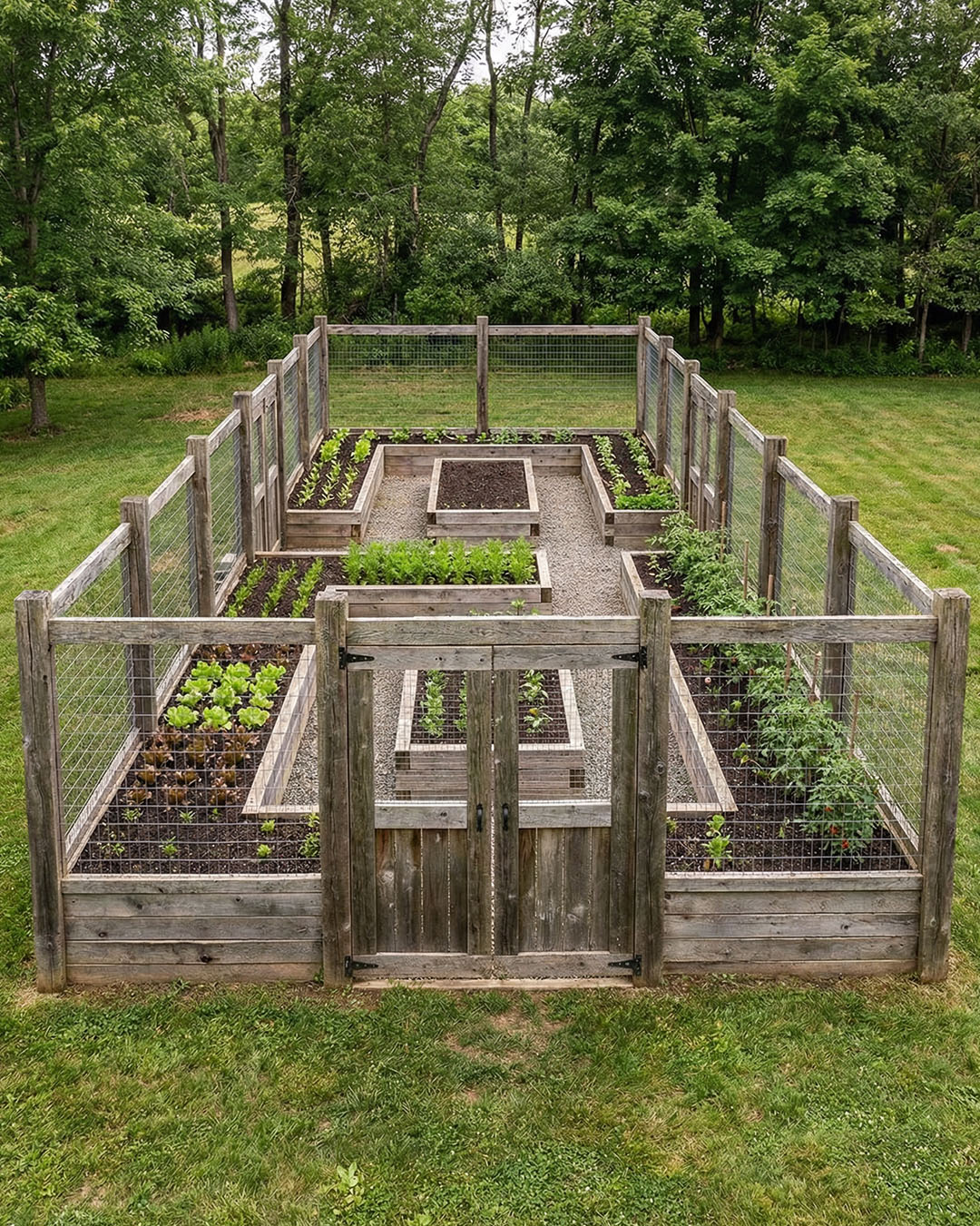
This setup works for everything from leafy greens to taller plants like tomatoes and peppers. Keeping crops separated into beds makes rotation easier and helps prevent disease buildup.
Why It’s Worth the Effort
An enclosed raised garden like this saves time, protects harvests, and keeps the growing space tidy and efficient. It’s a long-term solution that pays off season after season, turning gardening into something predictable and enjoyable instead of a constant battle with pests.