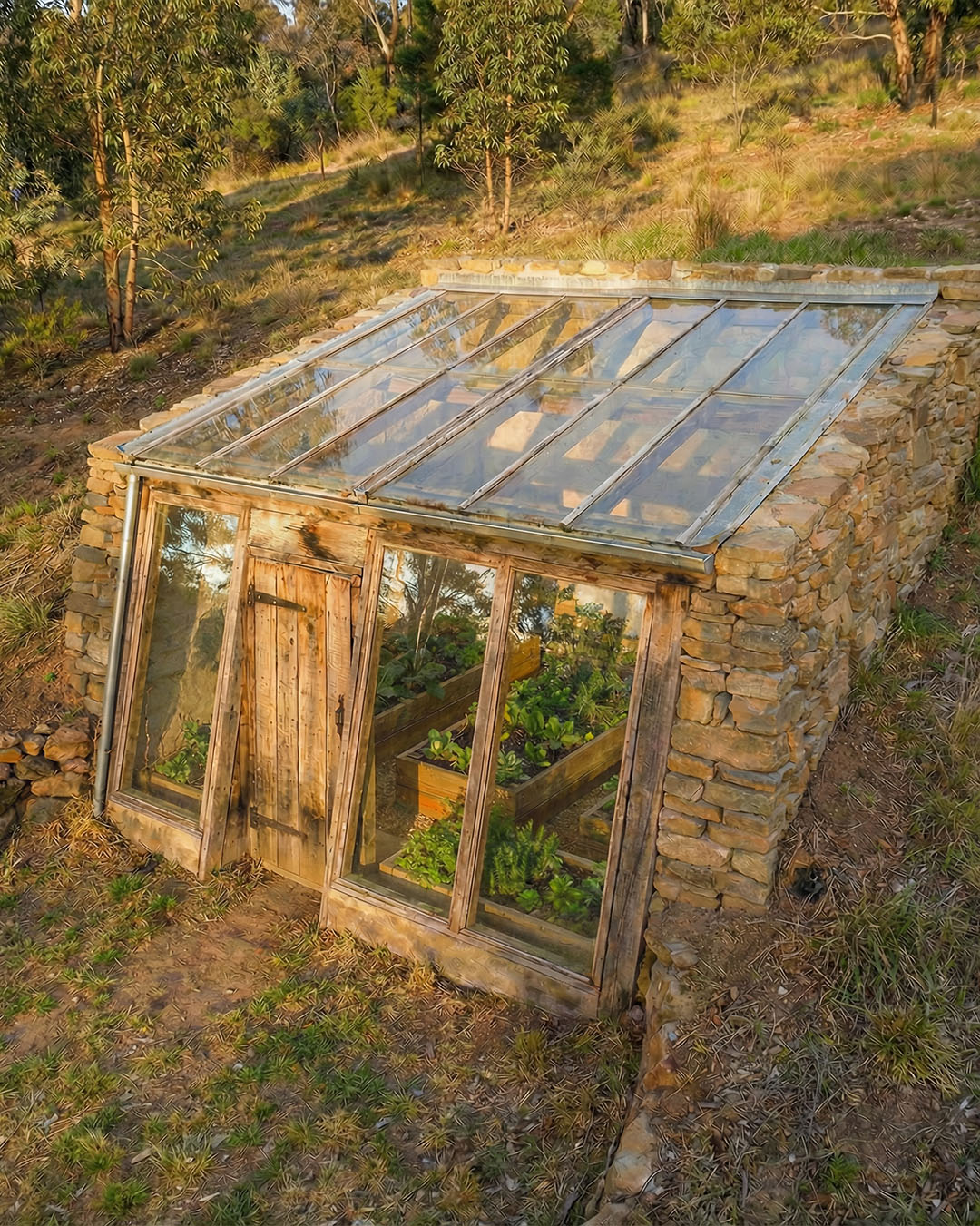
A walipini greenhouse turns the earth itself into insulation, creating a protected growing space that stays surprisingly stable through changing seasons. Built partially underground and capped with a sun-facing roof, this type of greenhouse makes it possible to grow fresh food far longer than traditional above-ground structures, often without added heat.
By working with the natural temperature of the soil instead of fighting it, a walipini creates a calm, productive environment that feels warm in winter and cool in summer, even when outdoor conditions are harsh.
How to Build a Walipini Like This
1. Choose the Right Location Pick a spot with good sun exposure, ideally facing south or the sunniest direction in your area. A natural slope makes excavation easier and improves drainage. Avoid low spots where water collects.
2. Dig Below Ground Level Excavate a rectangular pit several feet deep. The deeper you go, the more stable the temperatures will be. Keep the back and side walls vertical and compact the floor well so it doesn’t shift over time.
3. Build Solid Earth Walls
Use stone, block, or other masonry to create thick retaining walls on the back and sides. These walls hold back soil and act as thermal mass, absorbing heat during the day and releasing it slowly at night. Good drainage behind the walls is critical. Gravel and proper slope keep moisture from building up.
4. Install the Slanted Roof
The roof is angled toward the sun and covered with clear panels or glass. This angle maximizes low winter sunlight while shedding rain. Strong framing is important, as the roof supports both glazing and snow load in colder regions.
A simple wooden door and framed windows complete the front wall.
5. Build Raised Beds Inside Raised beds improve drainage and make planting easier. They also warm faster than ground soil. Fill them with rich, well-balanced soil and space them so light reaches every bed.
How to Use a Walpiri Greenhouse
A walloping excels at:
Starting seedlings early
Growing leafy greens through cold months Protecting crops from wind and frost Extending the harvest season without added heat Ventilation is important. On sunny days, doors or windows should be opened slightly to prevent overheating. At night, everything is closed to trap warmth.
Crops can be rotated seasonally, with cool-weather plants thriving when outdoor gardens are dormant.
Benefits of This Design Natural temperature stability from surrounding earth Lower maintenance than above-ground greenhouses Protection from harsh weather Efficient use of materials and space Long growing season using passive solar energy Because the structure works with the landscape instead of against it, it stays comfortable without relying on external systems.
Why This Approach Is So Effective
The earth itself becomes part of the greenhouse. Stone walls store heat, soil buffers cold, and the sloped glass roof captures sunlight when it’s needed most. Combined, these elements create a steady growing environment that feels surprisingly mild even when the weather outside is not.
A walipini isn’t just a greenhouse, it’s a practical way to grow food by using natural design principles that have worked for generations.