As summer temperatures rise, the pollinators in your garden work overtime. While most gardeners remember to plant nectar-rich flowers for food, many forget that bees, butterflies, and wasps also desperately need fresh water to survive. However, providing hydration isn’t as simple as filling a bowl. Deep water sources like birdbaths or buckets can actually be dangerous traps where insects easily drown. The solution is a clever, floating hydration station often called a “bee boat.”
Why Bees Need a Life Raft Bees are notoriously poor swimmers. If they land on the surface of a standard birdbath, the surface tension can trap them, leading to exhaustion and drowning. They require a safe, dry landing zone right at the water’s level. A floating piece of wood serves as the perfect life raft. Because wood is porous, it wicks up moisture, allowing bees to land on the damp surface and drink safely without ever risking falling into the deep water.
Constructing Your Bee Boat To build this, start with a durable, waterproof container. A small galvanized metal tub is an excellent choice because it is rust-resistant and holds enough water that you won’t have to refill it every hour. The depth of the tub keeps the water cooler for longer, which is essential on hot days. Next, find a piece of untreated lumber, such as a scrap of cedar or pine. It is vital that you avoid pressure-treated wood, which contains chemicals that can harm the insects you are trying to help. Cut the wood so it fits loosely inside your tub with plenty of room to float freely.
The Secret is in the Drill Holes The most important modification to the wood is adding texture. Take a drill with a small bit and bore shallow holes all over the top face of the board. You do not need to drill all the way through. These partial holes will fill with water as the board floats, creating tiny, individual drinking pools. This mimics the shallow puddles found in nature, which are a bee’s preferred water source.
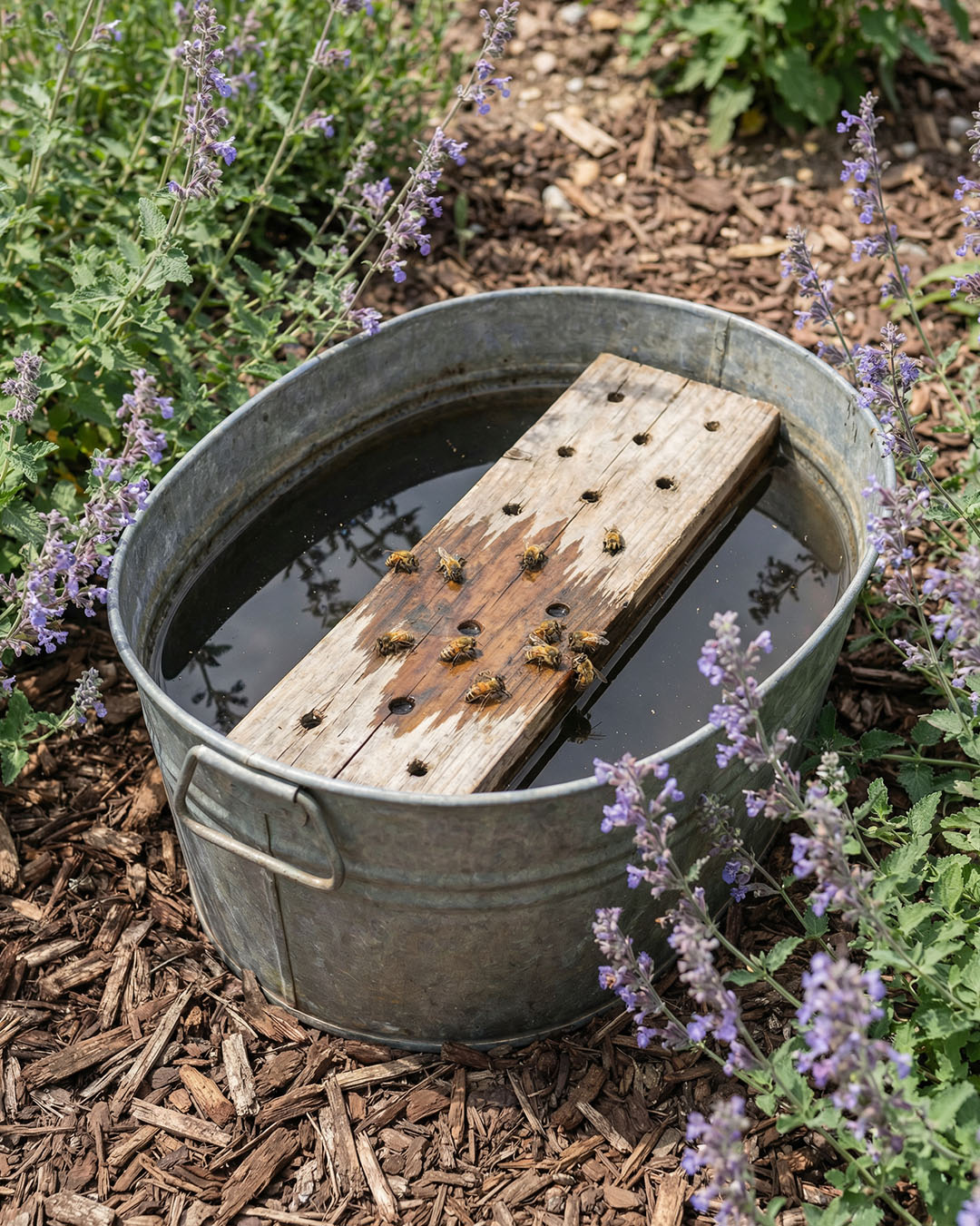
Location and Maintenance Place your new waterer directly in your garden beds, nestled among flowering plants. In effective setups, you will often see the tub placed right next to pollinator favorites like catmint or lavender. This allows the bees to stumble upon the water source while they are foraging, rather than having to search far and wide for it.
Finally, remember to refresh the water regularly. While the movement of the floating wood helps prevent some stagnation, you want to ensure the water stays clean and does not become a breeding ground for mosquitoes. A quick spray with the hose every couple of days is all it takes to keep your local pollinators happy and hydrated.